
Honoring Hawaiian Values
Honoring Hawaiian Values in the Pursuit
of Small Business Justice in Hawaiʻi
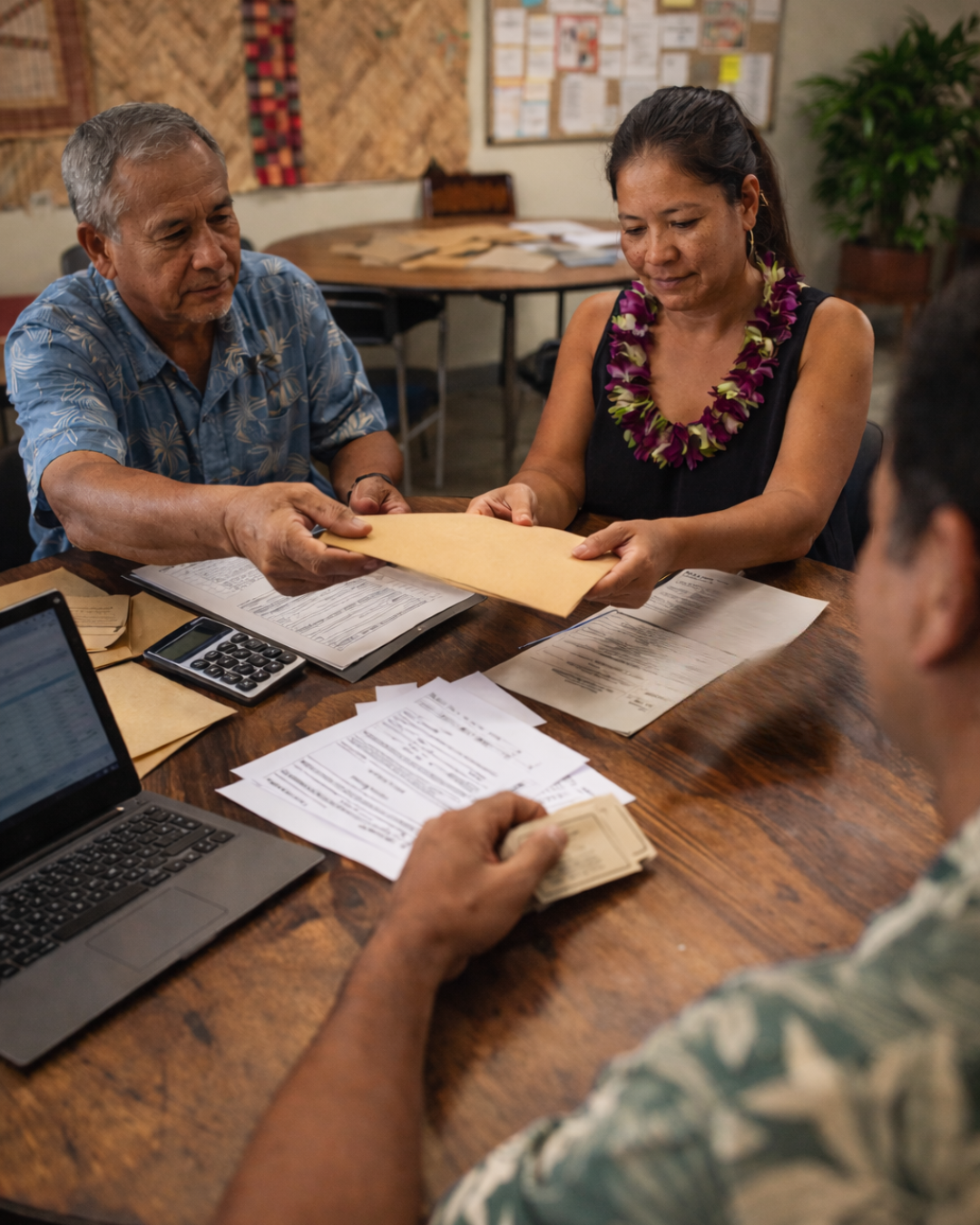
The UHERO report Investigating and Tackling Barriers and Needs for Small Business Success in Honolulu offers a detailed look into the challenges and aspirations of Honolulu’s small business community. At its core, the report reveals that the most resilient and relational business strategies are often grounded not in imported models of growth but in deep connections to people, place, and purpose.
For many Native Hawaiian business owners, these connections are expressed through moʻomeheu Hawaiʻi (Hawaiian culture) and ʻōlelo Hawaiʻi (language), not as branding strategies or market differentiators but as lived values. This article explores how policymakers, funders, and community partners can align with these values in non-extractive and non-exploitative ways that respect Hawaiian worldviews and strengthen truly regenerative local economies.

STRIVING FOR THE SUMMIT WITH INTEGRITY
The UHERO report shows that over 93 percent of small businesses find innovation support valuable, especially around marketing and operations. However, it is critical to question what kind of innovation we are investing in. Are we replicating Silicon Valley-style scale-for-profit models or are we supporting innovation that sustains community, culture, and ʻāina?
Kūlia i ka nuʻu, the value of striving for excellence, was Queen Kapiʻolani’s motto, and it must be reclaimed not as hustle culture but as a call to uplift pono (right action). For Native Hawaiian businesses, innovation is not always about disruption. It is about continuity: revitalizing ancestral practices, restoring food sovereignty, and reclaiming economic self-determination.
Business supports should not try to "teach culture" as a strategy for market access. Instead, they should resource what is already happening, led by kānaka ʻōiwi in their own communities.
BUILDING RELATIONSHIPS NOT PIPELINES
Networking was identified by the report as a critical factor for success, particularly among Native Hawaiian and Pacific Islander entrepreneurs. Over 61 percent identified it as extremely valuable. But let us be clear. Pilina (relationship) in Hawaiian thought is not transactional. It is based on kuleana (responsibility), aloha (compassion), and ʻoluʻolu (mutual respect).
Rather than imposing networking systems that prioritize pitch decks and scalability, Hawaiʻi can support community-rooted pilina through:
» Peer learning cohorts for Native Hawaiian business owners
» Culturally grounded business convenings led by community-based organizations
» Mentorship that is reciprocal and respectful rather than top-down or colonial in nature
ʻOHANA AS ECONOMIC FOUNDATION NOT FREE LABOR
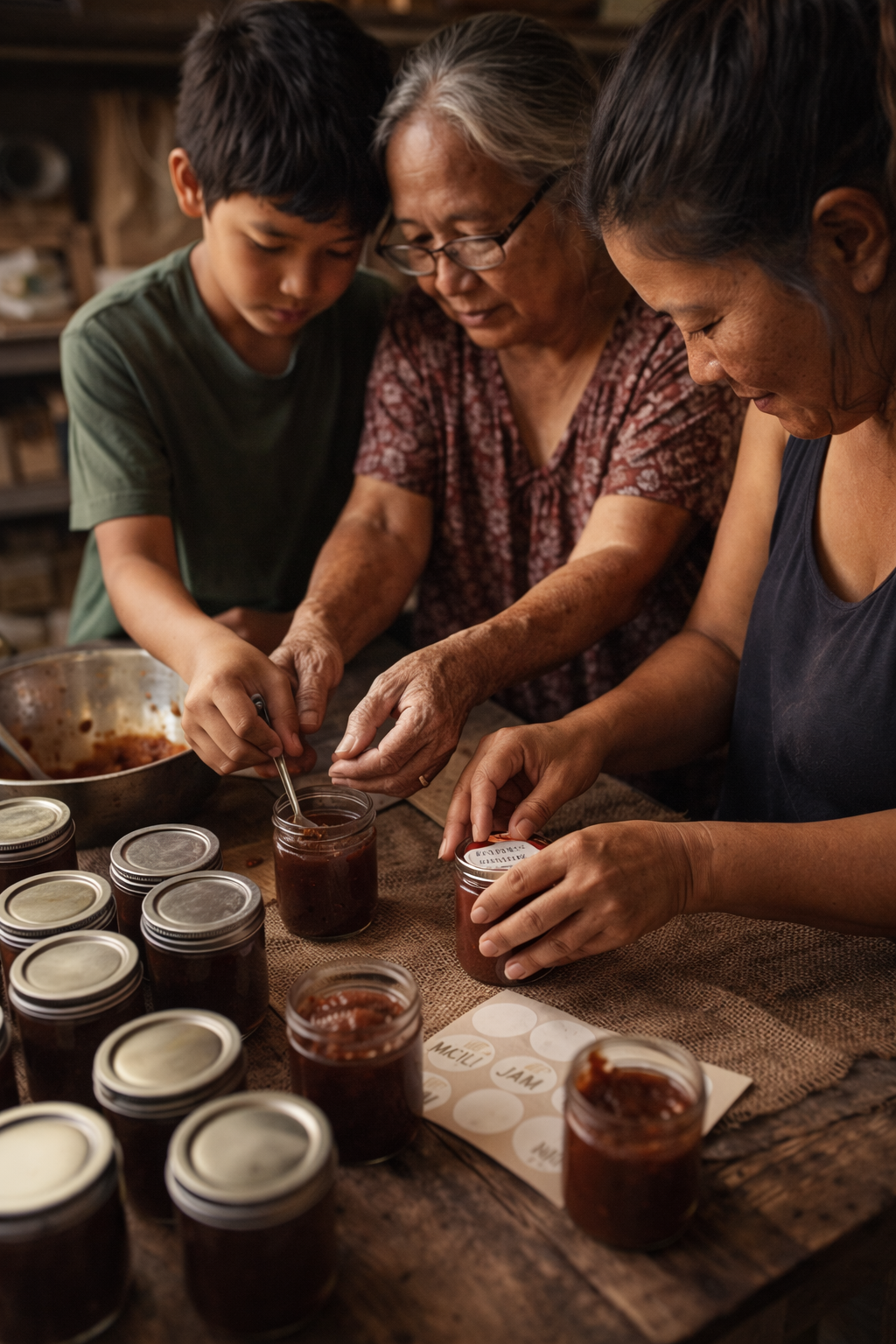
The report notes that nearly 46 percent of businesses rely on family involvement, with even higher rates among Native Hawaiian entrepreneurs. But we must resist romanticizing this statistic without also resourcing it.
ʻOhana is not a loophole for unpaid labor. It is a system of mutual support. When family is deeply embedded in business, it reflects Indigenous models of collective economy rather than individualist capitalism. Programs must therefore
» Offer childcare and elder care support for entrepreneurs
» Create funding mechanisms that allow for multi-owner or ʻohana-based business models
» Respect that succession planning may follow cultural, not corporate, values

REGENERATIVE OVER EXTRACTIVE
Hawaiʻi’s economy has long been shaped by extractive industries, from sugar to tourism to military contracting. The UHERO report underscores that small locally owned businesses, especially those in food, health, and arts, want to operate differently. Yet they often struggle to access capital, digital tools, and infrastructure support.
Aligning with ola ka ʻāina, ola ke kanaka (when the land thrives, the people thrive), we must invest in businesses that restore. These include businesses that steward land, grow food, revitalize ʻike kūpuna (ancestral knowledge), and build intergenerational wealth without commodifying culture.
This means funding:
» ʻŌiwi-led farms and lāʻau lapaʻau practitioners
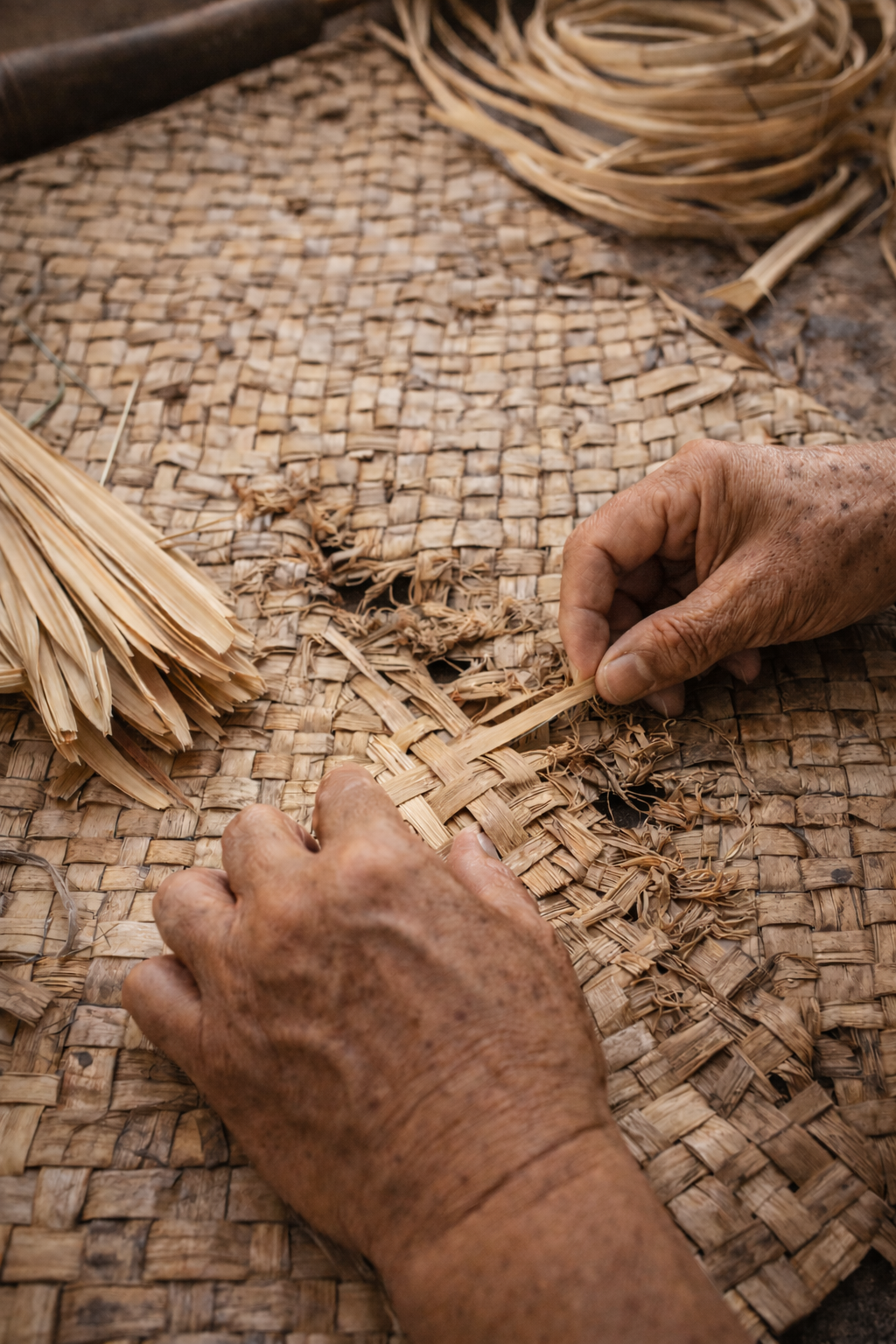
» Makers and artists who carry ʻike kupuna
» Cultural tourism enterprises that center on protocol not profit
And it means saying no to initiatives that appropriate Native culture for branding or economic gain. ʻŌlelo Hawaiʻi is not a slogan. Moʻomeheu Hawaiʻi is not a marketing toolkit.
REPAIRING WHAT HAS BEEN BROKEN
Native Hawaiian entrepreneurs still face systemic barriers to financing, especially younger and minority business owners. These barriers are not gaps. They are outcomes of colonial systems that stripped kānaka of land, language, and livelihoods.
To move forward, we must engage in hoʻoponopono. This is not just individual healing but structural repair. This includes
» CDFIs and microloan programs rooted in Native governance
» Grantmaking guided by ʻike kūpuna and community decision-making
» Technical assistance delivered by Hawaiian-serving organizations in ʻōlelo Hawaiʻi when appropriate
Economic justice in Hawaiʻi cannot be achieved through inclusion into broken systems. It must be built from the ground up, guided by values of aloha ʻāina, mālama, and pono.
FINAL THOUGHT: FROM EXTRACTIVE TO REGENERATIVE BUSINESS ECOSYSTEMS
The UHERO report provides an important diagnosis, but it is up to us to ensure that the solutions we build do not replicate the systems that caused the problems.
To truly support Native Hawaiian and local small businesses, we must move from inclusion to transformation, from profit-first to people-first, from appropriation to authenticity, and from transactional to transformational relationships.
This is the work of Changemakers.
It means navigating prosperity in a way that is relational, restorative, and rooted in aloha.