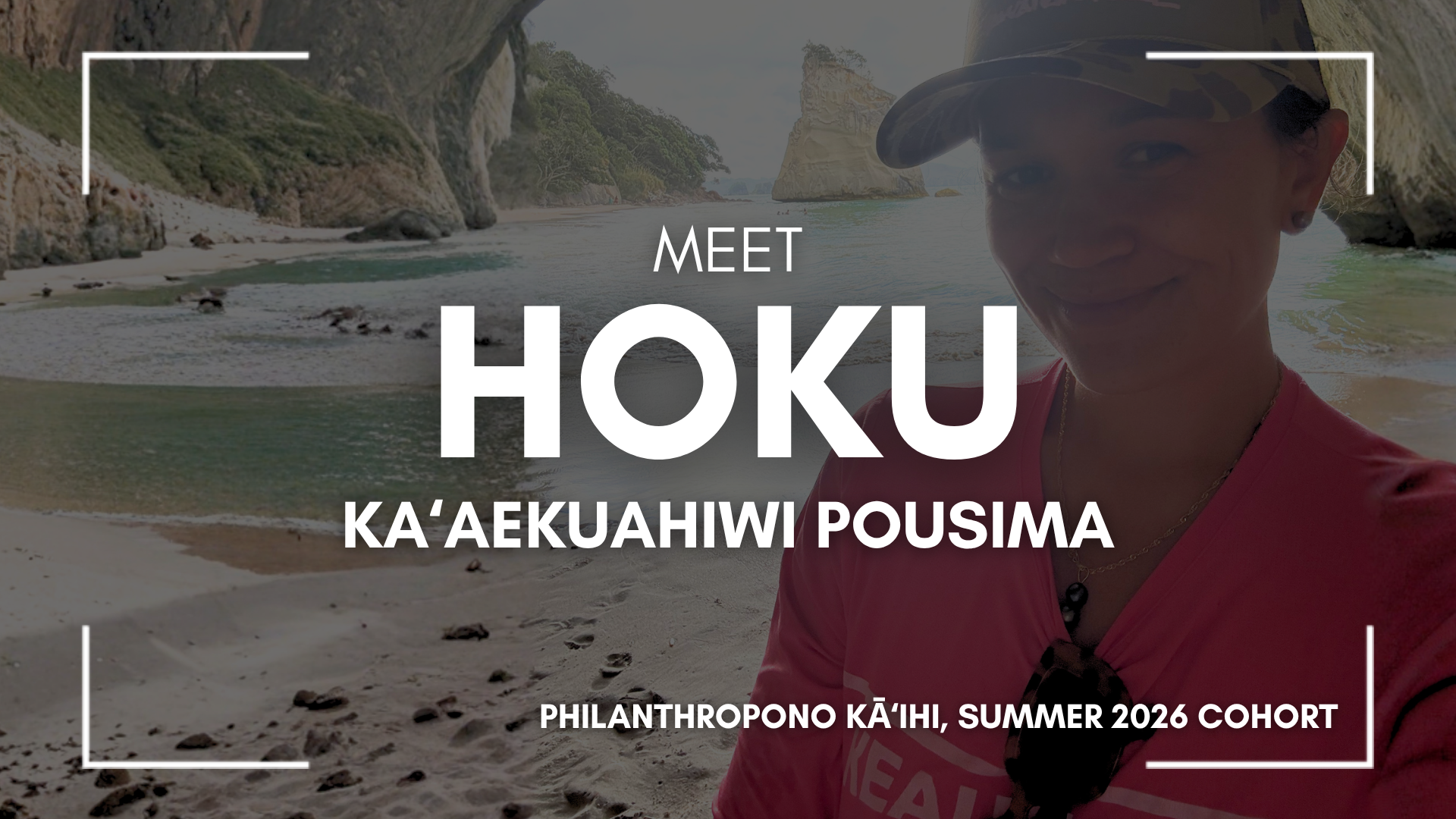

Widening the Path: Hoku Kaʻaekuahiwi Pousima’s Philanthropono Journey
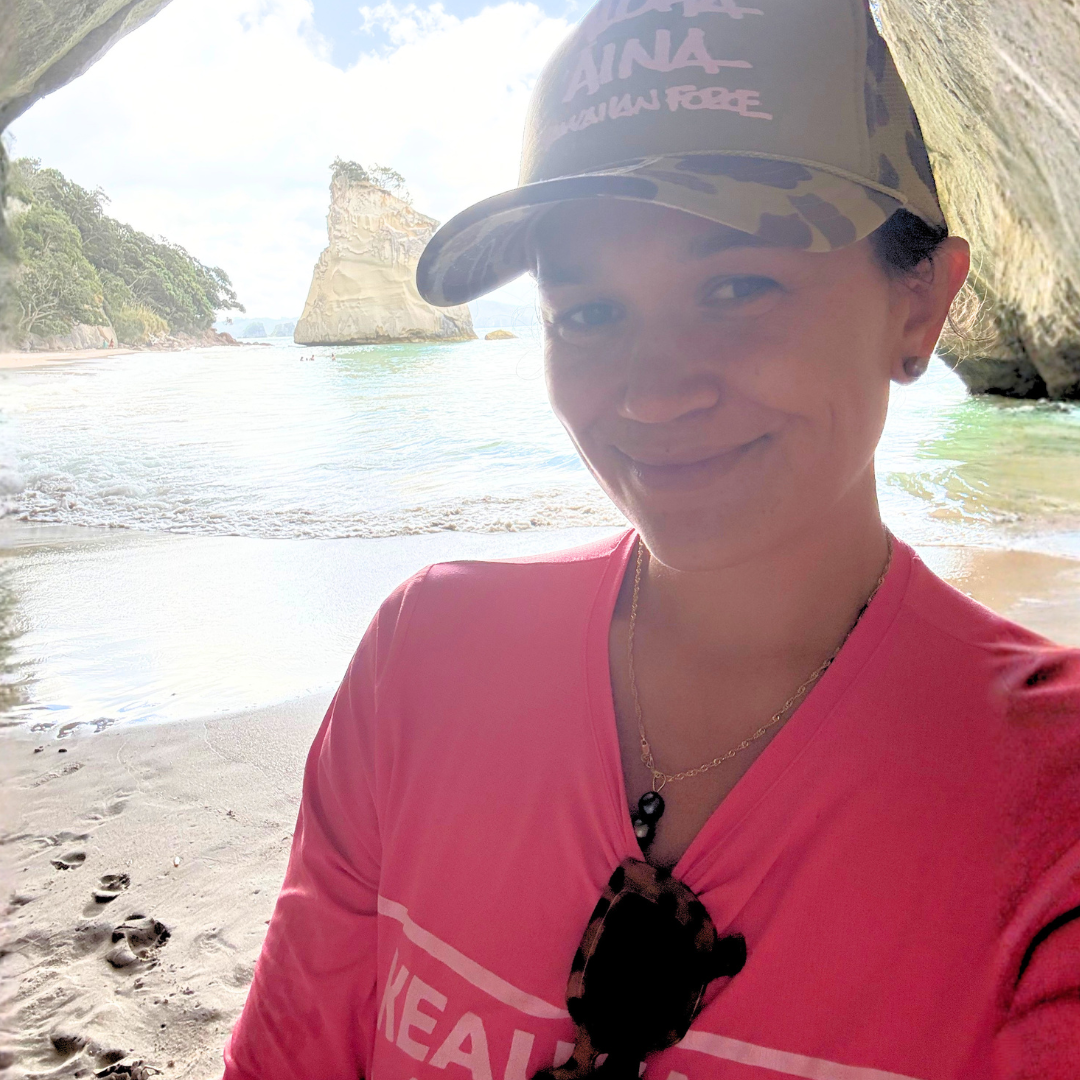
For Hoku Kaʻaekuahiwi Pousima, fundraising begins with place.
When she stepped into the Philanthropono Spring 2026 Hōʻike as a member of the Kaʻiʻi beginner cohort, Hoku invited everyone listening into Koholālele, an ahupuaʻa in the moku of Hāmākua on Hawaiʻi Island and home to the work of Hui Mālama i ke Ala ʻŪlili, affectionately known as HuiMAU.
Founded in 2011, HuiMAU is committed to cultivating kīpuka—safe, regenerative spaces where place-based ancestral knowledge, healthy food and ecosystems, and strong ʻohana can grow and thrive. At the heart of the organization is a deeply held understanding: the health and well-being of people cannot be separated from their relationship with the ʻāina that sustains them.
That relationship shaped Hoku’s Spring case for support.
HuiMAU had identified an urgent priority: helping Noho Papa—generational community members—continue to live, work, raise their ʻohana, and remain rooted in Koholālele, while also increasing access to nutritious, locally grown food throughout Hāmākua. The organization envisioned eight farm dwelling units for HuiMAU staff and their ʻohana, along with an agricultural processing center and commercial kitchen that could expand food production while creating employment opportunities for community members.
But bringing that vision to life would require something less visible and equally important: fundraising capacity.
Hoku’s Spring ask was clear—$750,000 to support five years of salary and benefits for a full-time development director who could build and execute a fundraising strategy for HuiMAU’s housing and agricultural development projects from 2027 through 2031. Rather than relying on a temporary consultant, HuiMAU wanted to grow that expertise from within the organization and community.
It was a case for support about far more than hiring one person.
It was about building the capacity necessary for a community to determine and sustain its own future.
By the time Hoku returned for the Summer Hōʻike as part of the Kāʻihi intermediate cohort, she was ready to take that thinking another step.
The big vision was still there. But this time, Hoku turned her attention to what happens between major campaigns and capital projects—to the everyday relationships that keep a community connected to an organization and its work.
“So not the capital campaign, not the big construction of…housing and ag processing center,” she explained, “but really the day-to-day.”
And, she added, “That’s where this annual fundraising strategy comes in.”
Her Summer strategy focused on four areas: individual donors, ongoing communications through a newsletter, board engagement, and HuiMAU’s community events and biennial art gala.
At the center of it all was pilina.
Hoku proposed creating stronger systems for understanding and caring for individual donors, including implementing a constituent relationship management platform so HuiMAU could better track relationships and communicate with the people supporting its work. A regular newsletter would become another way to share moʻolelo, provide program updates, celebrate donors, and show how contributions are advancing HuiMAU’s mission.
The purpose was not simply better recordkeeping.
It was a way to “continue to build pilina with the folks who are really on this journey with Hui Mau throughout the year.”
Hoku carried that same relationship-centered approach into HuiMAU’s board and community events.
Rather than defining board giving solely through dollars, she encouraged HuiMAU to tell the fuller story of how each board member contributes—through time, expertise, relationships, resources, or financial support.
“We all give in different ways,” Hoku reminded the audience.
Watch Hoku’s Kāʻihi Hōʻike presentation.
She also saw opportunity in the gatherings HuiMAU was already creating. Because many of the organization’s events are free and well attended, they offer an organic place for community members to experience HuiMAU’s work first-hand and then discover ways to become part of it.
Hoku imagined donor levels inspired by the ecosystems of the ahupuaʻa, an interactive mahalo mural that would become part of HuiMAU’s ongoing story of gratitude, and meaningful donor offerings connected to the creativity already present within the organization.
Then there was the art.
HuiMAU’s first art gala, featuring work by its Director of Creative Development and Kanaka artist Haley Kailiehu, had already shown tremendous potential. The artwork sold quickly, and Hoku saw an opportunity to transform the event into a much-anticipated biennial gathering rooted in food, art, storytelling, and place.
Future galas could bring together locally grown foods and local chefs, music and community, exclusive collaborations, interactive art, and collections organized around meaningful themes. Hoku even imagined a gala inspired by the Kumulipo, with individual works connected to its wā.
Rather than simply adding another fundraiser to the calendar, the goal would be to create an experience people look forward to—one that tells HuiMAU’s story and gives supporters another way to deepen their relationship with the work.
Across both Hōʻike presentations, however, Hoku continually returned to an image much older than any fundraising plan.
Hāmākua i ke ala ʻūlili.
She shared the ʻōlelo noʻeau as a description of the steep trails of Hāmākua—paths first carved by kūpuna and left for following generations to travel.
For Hoku, those trails are also a reminder.
Our kūpuna have left knowledge, resilience, and pathways forward. But each generation still has kuleana to do the work—to travel the trail, care for it, and make it a little wider for those who will follow.
That imagery carried Hoku from Spring into Summer.
Her first Hōʻike asked what HuiMAU would need to make a bold vision of housing, food sovereignty, employment, and Noho Papa possible. Her second began building the relationships and systems that can sustain that vision year after year.
One focused on the destination.
The other looked more closely at how people travel there together.
And at the end of her Summer presentation, Hoku once again invited everyone onto that path:
“I hope you folks will join us as we continue on the Ala ʻŪlili. We’ll be here widening and smoothing the way for the Noho Papa of this place, figuring out the next steps as we grow. And we hope you’ll join us on that journey.”
From Kaʻiʻi to Kāʻihi, Hoku’s Philanthropono journey demonstrates that fundraising capacity is not separate from community building. Done with intention, it can become another way of tending relationships, strengthening place, creating opportunity, and ensuring that the people who belong to Hāmākua can continue to call it home.
The trail is already there.
Hoku and HuiMAU are helping widen it for the generations still to come.
Ready to strengthen your fundraising practice?
The next Philanthropono cohort is an opportunity to build practical fundraising skills while staying rooted in Indigenous values, relationship, and community care.
Read more and watch other participants and the entire Summer 2026 Kaʻiʻi & Kāʻihi Hōʻike presentation.