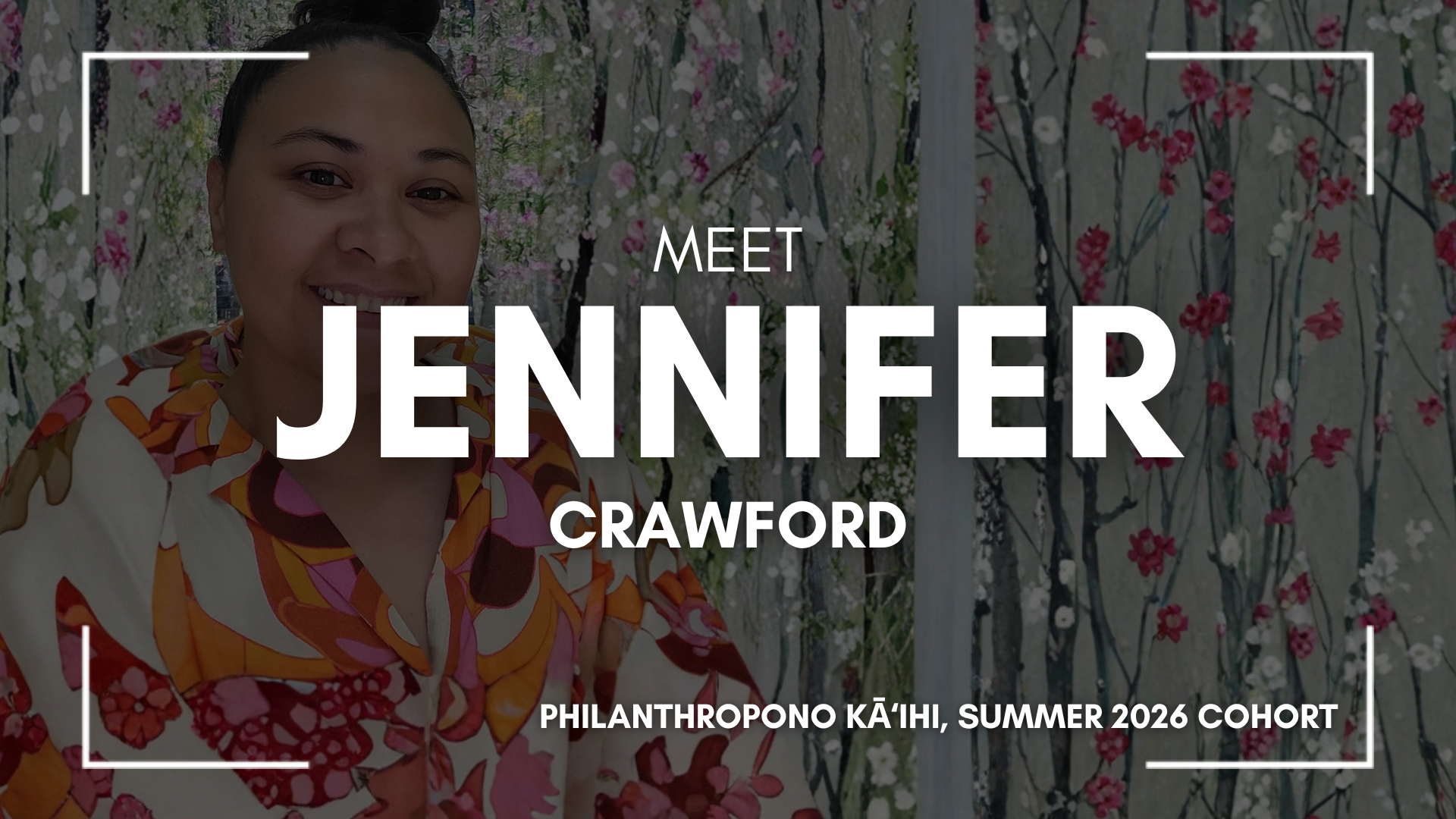

From Building Bridges to Growing a Lāhui: Jenny Crawford’s Philanthropono Journey
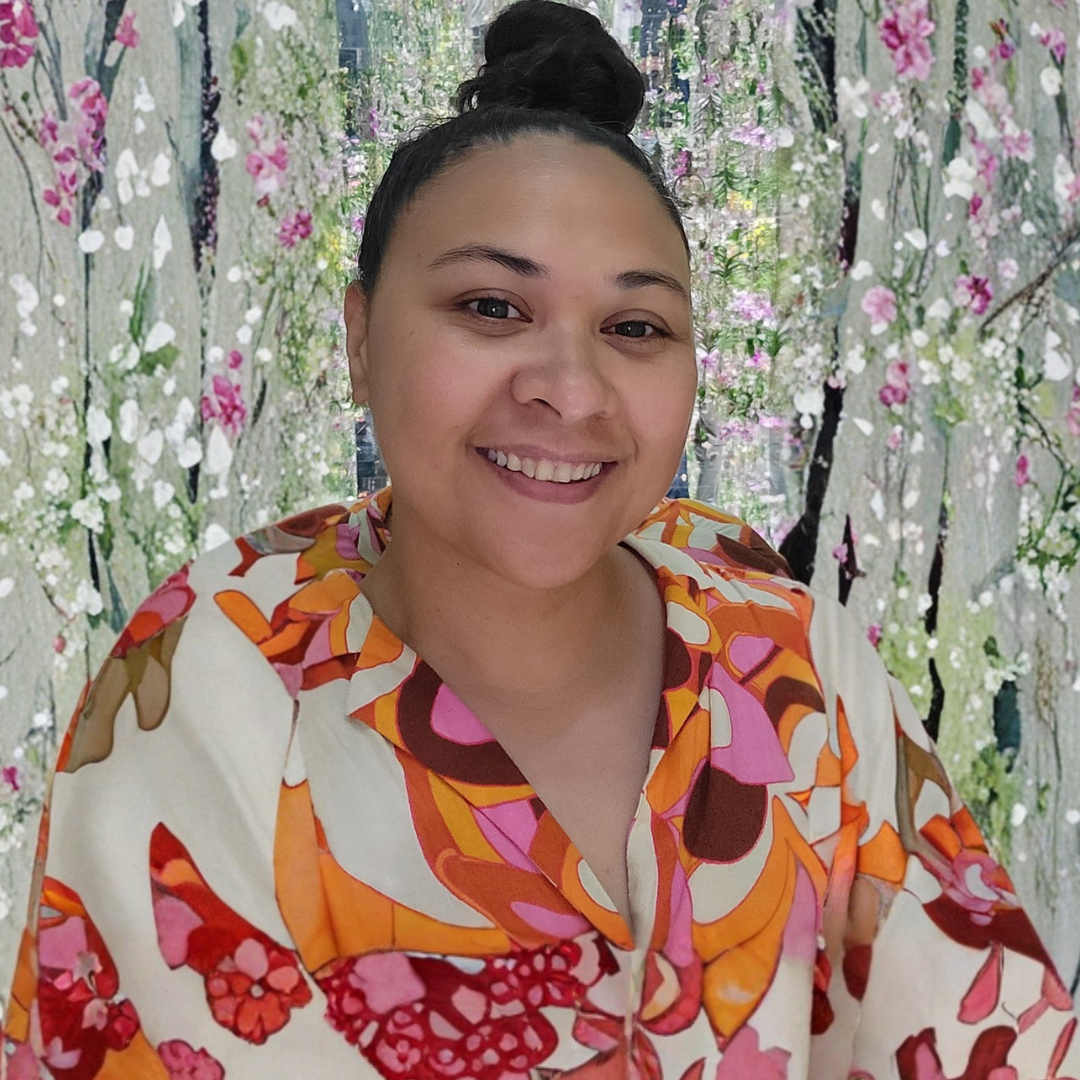
When Jenny Crawford first stepped into the Philanthropono Hōʻike in Spring 2026, she brought with her a deep commitment to Hawaiʻi’s young people and a belief that fundraising could be about much more than raising dollars.
As a member of the Kaʻiʻi beginner cohort, Jenny represented Hale Kipa, an organization that has walked alongside Hawaiʻi’s youth and young adults for more than five decades. Her case for support, Build the Bridge, Close the Gap, invited people to see fundraising not simply as a financial transaction, but as an opportunity to become part of a larger circle of care.
Jenny shared an ambitious $1.6 million fundraising goal, but behind those numbers were young people and the everyday things that help them feel safe, supported, and seen. She showed how a gift could become a bus pass, a hygiene kit, groceries, emergency shelter, counseling, or another step toward stability.
Her message was clear: when people understand what their generosity makes possible, giving becomes a way to build a bridge between community and the young people who need them.
Jenny described the work as something that required putting both our “head and hearts” into a thoughtful plan. And throughout her Spring presentation, that balance of strategy and aloha was already taking shape.
Just a few months later, Jenny returned to the Hōʻike—but this time, she was standing in a different place in her journey.
As part of the Kāʻihi intermediate cohort, Jenny had recently joined Ke ʻAlohi O ʻEwa, a Native Hawaiian parent- and community-led organization working to strengthen and expand Hawaiian language immersion education throughout the ʻEwa Moku. Instead of developing a foundational case for support, Jenny was now applying what she had learned to create the organization’s first comprehensive annual fundraising plan.
And before talking about goals, grants, sponsorships, or donor systems, Jenny began where the work itself begins: with moʻolelo.
She shared how Ke ʻAlohi O ʻEwa grew from the determination of mākua at Ke Kula Kaiapuni o Waiau who were confronted with a painful question: Where would their keiki go after sixth grade? Their advocacy helped lead to the opening of Ke Kula Kaiapuni o Kapolei and continued a larger movement to create Hawaiian language educational opportunities for families throughout ʻEwa.
Jenny grounded the organization’s fundraising plan in the same values that ground its work: pilina, ʻoiaʻiʻo, and hoʻomana.
Pilina, she explained, is about relationship—to one another, to place, to purpose, to culture, and especially to language. ʻOiaʻiʻo asks people to show up authentically, make room for honest conversations, and remain accountable to future generations. Hoʻomana reminds us that through the work, people are empowered and, in turn, empower others.
For Jenny, those values cannot sit apart from fundraising.
“Our hana is really rooted in reciprocity,” she shared, emphasizing that the organization’s values must also be reflected in how resources are gathered and relationships are cared for.
Her Summer presentation laid out an approximately $500,000 annual fundraising goal supported through grants and contracts, corporate partnerships and events, earned revenue, and individual and major gifts. But the heart of the plan went far beyond the numbers.
Jenny envisioned community-centered gatherings that celebrate Native Hawaiian excellence, wahi pana huakaʻi that reconnect people to the moʻolelo and brilliance of ʻEwa, and papa ʻōlelo Hawaiʻi that invite adults and families to learn language together. Each was an opportunity not only to raise resources, but to deepen belonging, strengthen relationships, and help people understand why the work matters.
Near the end of her presentation, Jenny offered a thought that beautifully captured how her understanding of fundraising had grown through Philanthropono:
“You can’t protect something you don’t love, and you can’t love something you don’t know.”
For Jenny, that means helping people first come to know the work of Ke ʻAlohi O ʻEwa and the larger work of the lāhui—then giving them opportunities to care for it, stand beside it, and ultimately help protect it.
“We want to see them kind of move through these stages of being a donor to being an advocate and being activated in our Lāhui,” she shared.
That distinction matters.
Jenny reminded those gathered that community support cannot be measured only by a donation. Sometimes support is also a voice raised in testimony, a relationship shared, a family showing up, or someone choosing to stand alongside the work.
“To lend that voice as much as you lend your dollar to us,” she said, “it’s just as important to lend your voice to these kinds of things.”
She closed with an ʻōlelo noʻeau that brought the entire presentation back to the reason behind the work:
“He keiki aloha nā mea kanu.”
Our beloved children are the plants.
“And so,” Jenny reflected, “we really are planting, nurturing, and raising generations of Kaiapuni leaders.”
From Spring to Summer, Jenny’s Philanthropono journey tells a story of growth. In Kaʻiʻi, she learned to build a strong foundation—to tell an organization’s story, make the case for support, and invite others into its mission. In Kāʻihi, those foundations grew into something larger: a thoughtful fundraising strategy rooted in pilina, reciprocity, language, place, and the future of the lāhui.
The organizations changed. The fundraising goals changed. Jenny’s responsibilities grew.
But the thread connecting both Hōʻike presentations remained beautifully consistent: fundraising is ultimately about people caring enough to show up for one another.
Whether she is building bridges for Hawaiʻi’s youth or helping nurture the next generations of Kaiapuni leaders, Jenny continues to show what becomes possible when strategy is grounded in relationship—and when generosity grows into advocacy, belonging, and collective care.
Ready to strengthen your fundraising practice?
The next Philanthropono cohort is an opportunity to build practical fundraising skills while staying rooted in Indigenous values, relationship, and community care.
Read more and watch other participants and the entire Summer 2026 Kaʻiʻi & Kāʻihi Hōʻike presentation.