
Planting for the Next Hundred Years: Nohea Stevens’ Philanthropono Journey
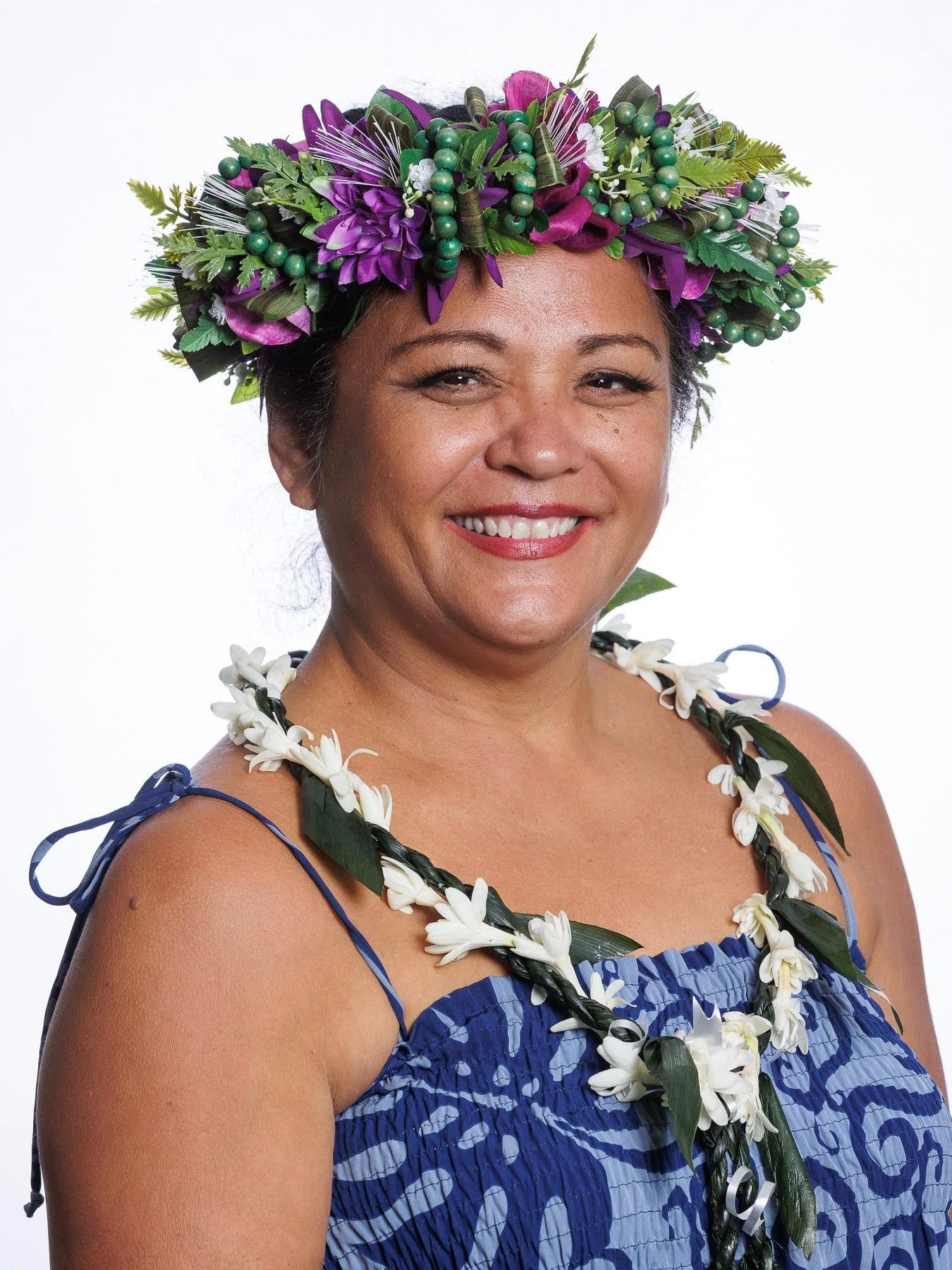
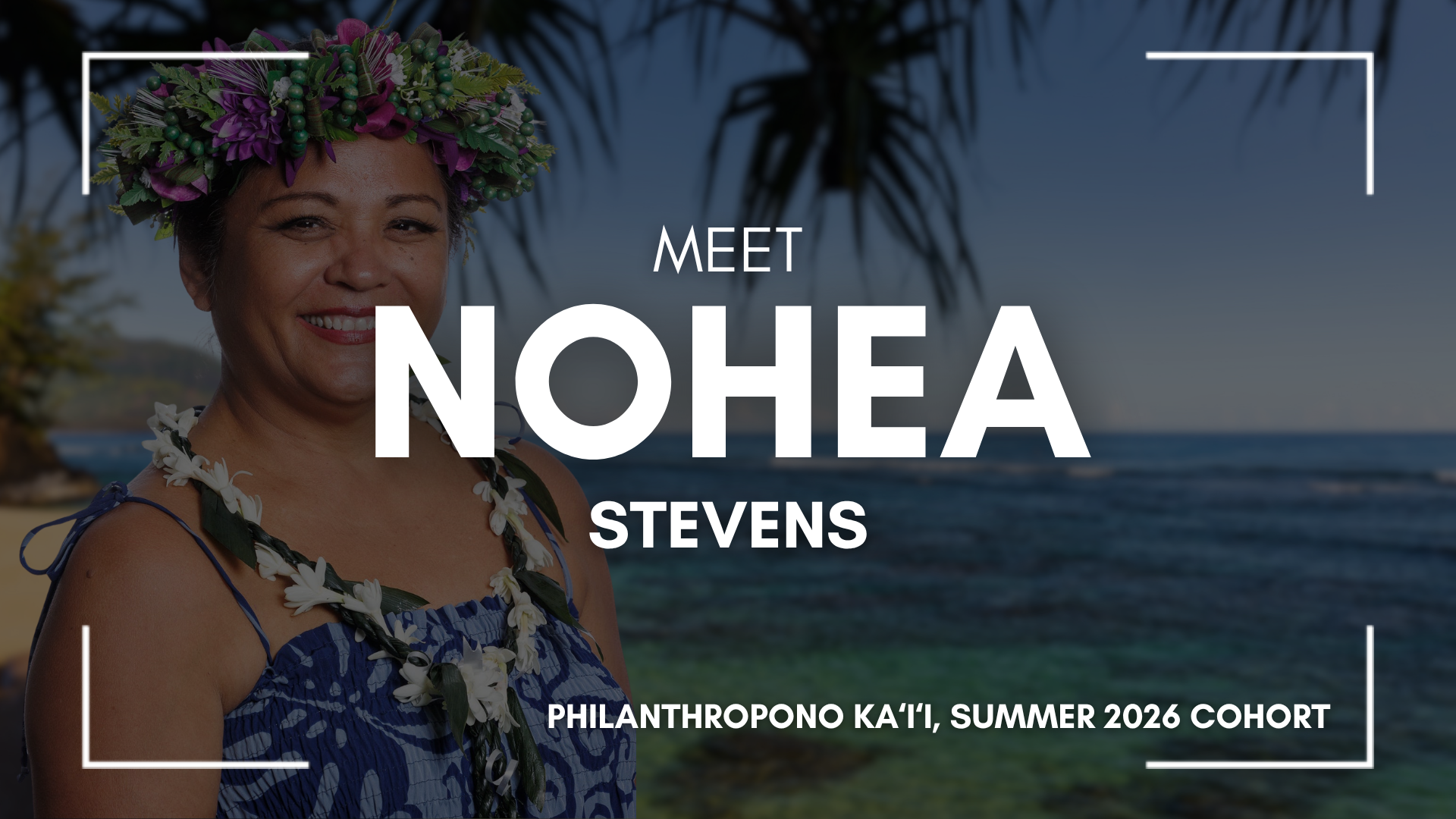
When Nohea Stevens stepped forward at the Summer 2026 Hōʻike, she began not with a fundraising goal, but with a story.
“Mahalo for this opportunity to share the moʻolelo of Kaʻala Farm,” she said. “Today I wanna share where we have come from, why this work still matters, and what it will take to carry it forward.”
As a member of Philanthropono’s Kaʻiʻi beginner cohort, Nohea represented Kaʻala Farm & Cultural Learning Center, a place deeply rooted in Waiʻanae and in the relationships between ʻāina, culture, community, and generations.
Kaʻala Farm’s story stretches back nearly 50 years, when young people from the Waiʻanae community began exploring the uplands of Waiʻanae Valley and rediscovered ancient loʻi kalo that had long been abandoned. What began as exploration became restoration—and, over time, a place where Hawaiian culture could be lived, practiced, learned, and passed forward. Today, Kaʻala Farm continues to steward that legacy through mālama ʻāina, education, food systems, cultural practice, and community connection.
Nohea described that legacy through the phrase kū i ke aka o nā kūpuna—standing in the shadows of our ancestors.
It was a fitting way to frame Kaʻala Farm’s journey.
What began with the restoration of wetland kalo and access to water has grown into responsibility for a much larger interconnected system: loʻi, ʻauwai, native forest, māla, education, wildfire mitigation, and community pilina. Across the Kaʻala Farm Cultural Learning Center, the Kīpuka Restoration Center, and Punanā, the organization now cares for land, historic places, cultural practices, and the relationships that make those places meaningful.
“This is not simply land management,” Nohea told the audience. “It is cultural stewardship.”
That distinction sits at the heart of Kaʻala Farm.
Waiʻanae is a community rich in resilience, culture, and aloha ʻāina. And for Nohea, culturally grounded places like Kaʻala Farm matter because young people need spaces where they can experience success, learn alongside kūpuna, understand culture as a strength, and begin discovering their own kuleana to community and ʻāina.
When haumāna arrive at Kaʻala Farm, they do not simply observe Hawaiian cultural practices.
They participate.
They learn protocol. They hear the moʻolelo of Hāloa. They enter loʻi kalo. They encounter native plants and traditional water systems. They learn how Hawaiian culture, ecological stewardship, food, land, and community are connected.
Kaʻala Farm describes itself as more than an environmental classroom. Its programs provide hands-on access to ʻāina and cultural knowledge, inviting students to learn through doing and caring for place. The farm currently welcomes approximately 3,000 students and visitors each year and continues to steward 97 acres while maintaining restored historic loʻi kalo.
For Nohea, however, one visit is only the beginning.
“Connection to ʻāina happens over time,” she shared.
Her vision is for young people to return again and again—to move from visitor, to participant, to caretaker and practitioner, and eventually to leader.
“Ultimately,” Nohea said, “success is when the student becomes the kumu, the teacher, and carries that knowledge back into their own family and community.”
That journey captures the deeper impact Kaʻala Farm hopes to create.
The organization tracks participation, volunteer hours, internships, acres restored, loʻi and ʻauwai maintained, native plants established, and wildfire fuel reduced. But Nohea also reminded those gathered that not everything meaningful can be captured in a spreadsheet.
“The numbers matter, but transformation matters more.
Sometimes that transformation begins during something as simple as a community workday.
On the second Saturday of each month, people come together for Lā Kōkua iā Kaʻala, working in the loʻi, clearing invasive vegetation, and helping care for the ʻāina. Kaʻala Farm relies on the laulima—the many hands—of volunteers to sustain this work.
But as Nohea explained, something else happens while people work.
“People reconnect to place, to culture, to community, and sometimes to themselves.”
That kind of reconnection is difficult to quantify, but it is central to why Kaʻala Farm continues to exist.
And sustaining it requires people.
Nohea’s Hōʻike presentation made a clear case for strengthening Kaʻala Farm’s educational capacity. Demand for learning opportunities has grown beyond the organization’s current staffing, and additional educational specialists would allow Kaʻala Farm to welcome more students, deepen curriculum, build stronger relationships with teachers, and create more opportunities for haumāna to return over time.
Her case for support also looked honestly at what it costs to care for an organization carrying such broad kuleana.
Kaʻala Farm’s annual fundraising goal is $2 million—funding that supports not only programs, but the people, benefits, ʻāina operations, equipment, safety, insurance, administration, data systems, and emergency reserves necessary to sustain the work responsibly.
“This is not an arbitrary fundraising goal,” Nohea explained. “It is what it takes to responsibly sustain our work.”
Her invitation to donors was therefore larger than funding a single project.
“Our kāhea, our invitation, is not simply to fund Kaʻala Farm,” she said. “It is to stand with Kaʻala.”
That support might take the form of unrestricted giving, sponsoring a position, investing in programs or wildfire resilience, or making a multi-year commitment that gives the organization stability. Whatever form it takes, the ultimate goal is capacity: more people prepared to teach, mālama, plan, and carry the work forward.
Nohea closed her presentation with words that beautifully connect Kaʻala Farm’s past, present, and future:
“If we plan for a year, we plant kalo.
If we plan for ten years, we plant koa.
If we plan for a hundred years, we teach our keiki aloha ʻāina.”
The same words welcome visitors to Kaʻala Farm today, a reminder that some of the most important things we plant may take generations to fully grow.
“Fifty years ago, others planted something for us,” Nohea reflected. “Now it is our turn to make sure another generation can look back and say, someone thought about us. Someone protected this ʻāina for us. Someone kept this ʻike, this knowledge alive for us.”
That may be the clearest expression of Nohea’s Philanthropono journey.
Her Summer Hōʻike was a fundraising presentation, but it was also an invitation to think differently about what sustainability means.
It means having enough resources to keep the doors open and the programs running.
But it also means keeping the loʻi flowing.
Keeping ʻike in practice.
Keeping people connected to place.
And ensuring that one day, the haumāna standing in the mud at Kaʻala Farm becomes the kumu guiding someone else.
Nearly 50 years ago, a generation chose to restore something for those who would come after them.
Today, Nohea and Kaʻala Farm are asking all of us to help plant for the next hundred years.
Ready to strengthen your fundraising practice?
The next Philanthropono cohort is an opportunity to build practical fundraising skills while staying rooted in Indigenous values, relationship, and community care.
Read more and watch other participants and the entire Summer 2026 Kaʻiʻi & Kāʻihi Hōʻike presentation.