
One System,Less Reporting
PAST PODS


When Every Funder Wants Something Different
One funder wants quarterly numbers.
Another wants participant stories.
A third wants outcomes reported in a completely different format.
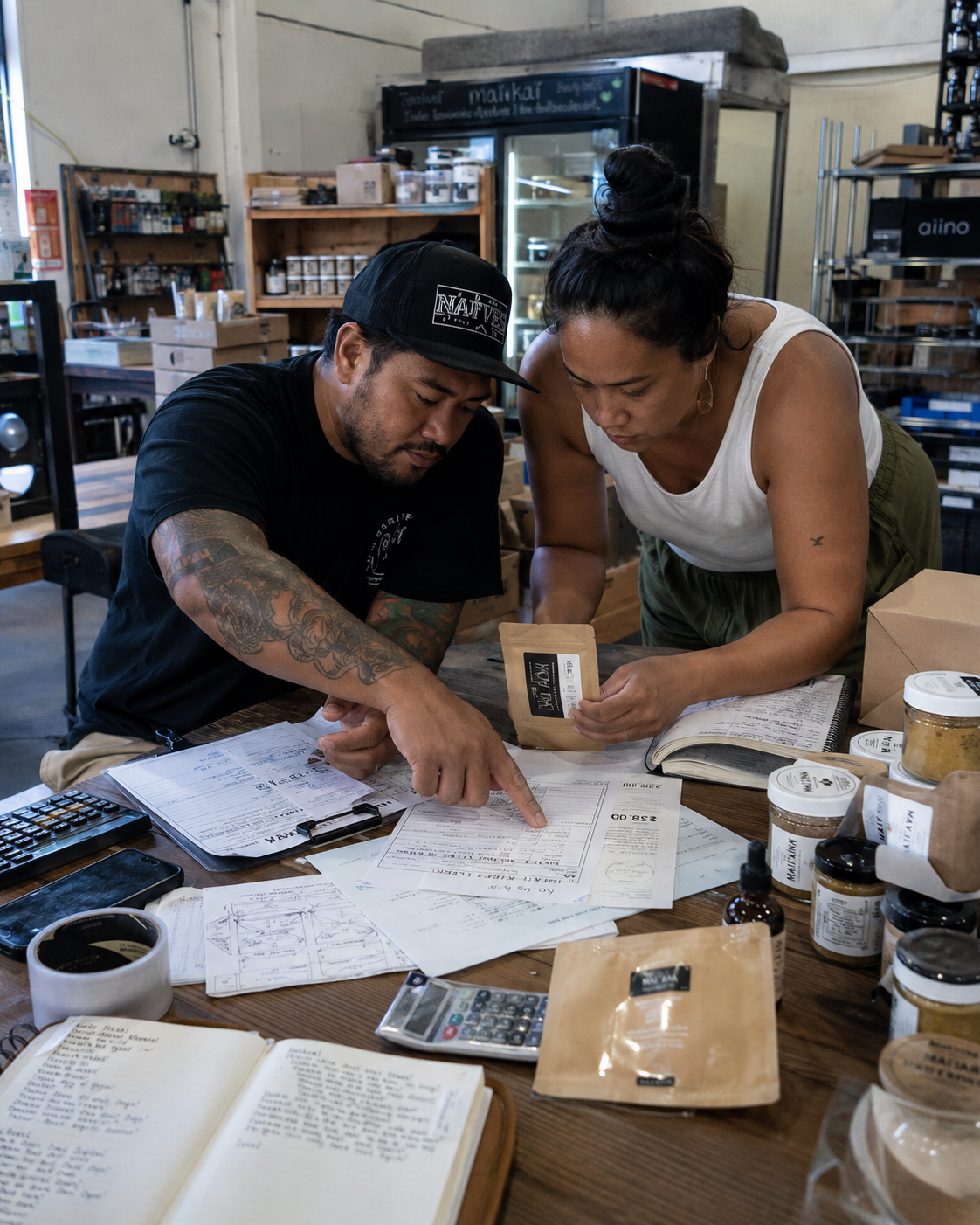
Meanwhile, your staff is trying to remember which spreadsheet belongs to which grant.
For many nonprofits, reporting does not feel like one system. It feels like several separate systems competing for the same limited time.
The Hidden Cost of Duplicated Reporting
Funder reporting is necessary. Organizations should be able to show how resources were used and what progress was made.
But the process becomes burdensome when every grant creates a new set of measures, forms, timelines, and tracking tools.
Staff may find themselves:
Entering the same information into several spreadsheets
Rewriting similar program descriptions for different reports
Tracking slightly different versions of the same outcome
Searching through emails and files for missing data
Collecting information that is used once and never reviewed again
This does more than create administrative frustration.
It takes time away from program delivery, relationship-building, fundraising, planning, and community care.
The Problem Is Often the System, Not the Staff
When reporting feels chaotic, organizations may assume they need to work harder or collect more data.
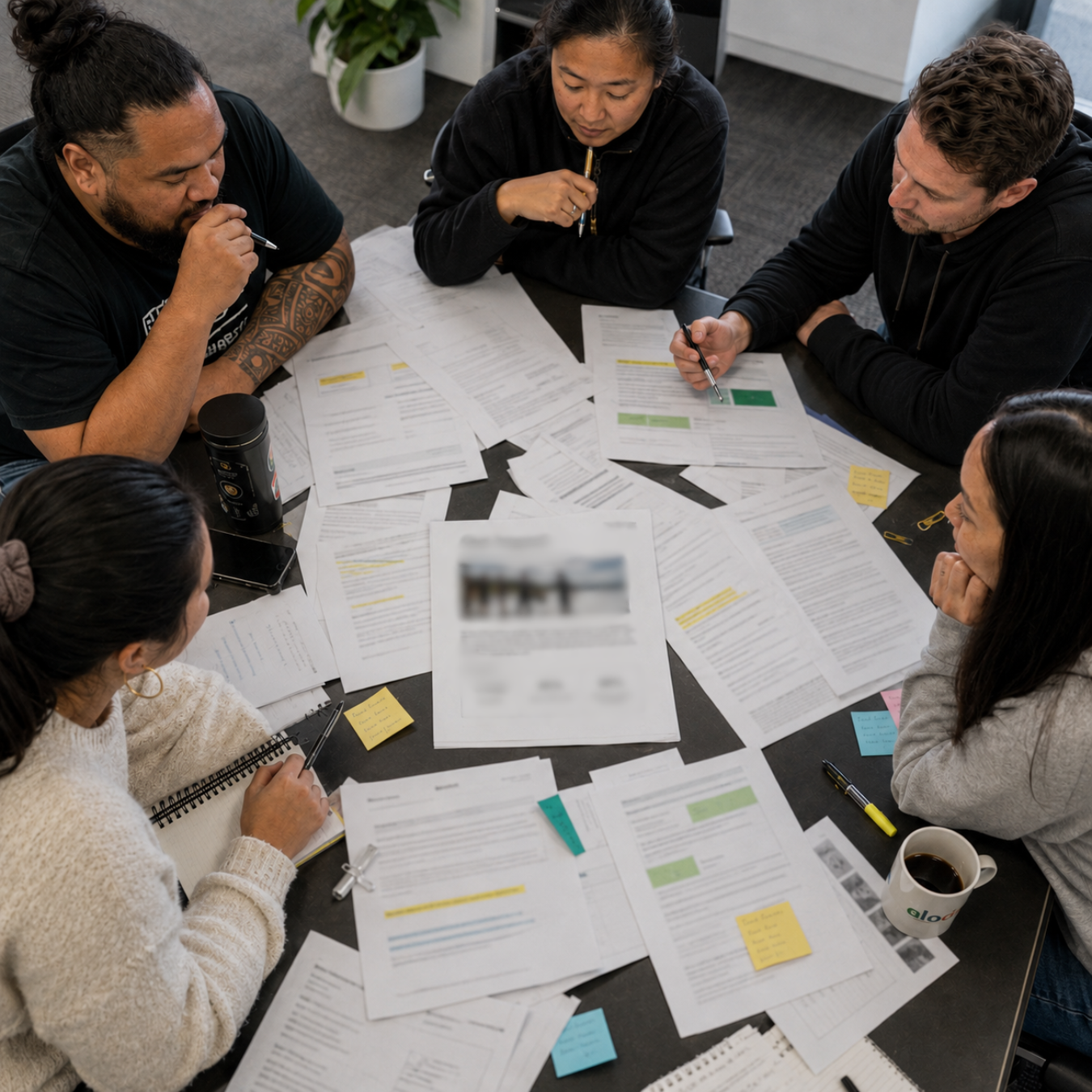
Often, the real problem is that each grant has been treated as a separate evaluation project.
One program may have five funders and five different reporting systems, even though all five funders are supporting similar activities and outcomes.
That structure almost guarantees duplication.
A stronger approach begins by identifying what the organization needs to know across all of its programs and funding relationships.
Then funder requirements can be mapped onto that shared system.
Build One Organizational Story
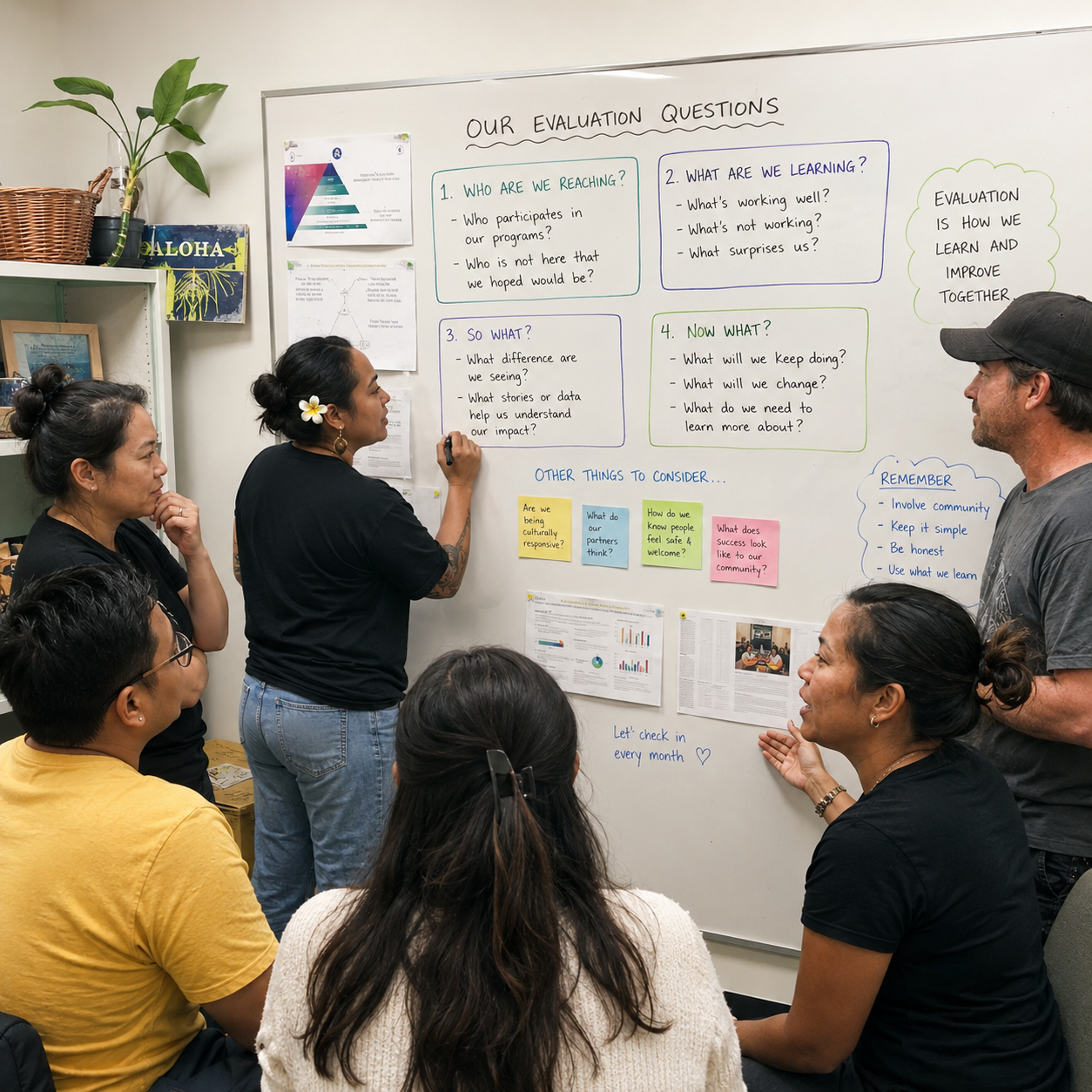
Instead of beginning with each funder’s report, nonprofits can begin with a core set of organizational questions.
For example:
Who are we reaching?
What services or activities are we providing?
What changes are participants experiencing?
What community priorities are we addressing?
What are we learning?
What needs to improve?
These questions can guide a central evaluation framework.
Individual funder requirements can then be connected to that framework rather than creating a completely new system every time a grant is awarded.
This does not mean every funder will ask for exactly the same information.
It means the organization can collect information once and use it thoughtfully across multiple reports.
Fewer Systems Can Produce Better Information
When data is collected consistently, organizations can see patterns more clearly.
They can compare results across programs, identify gaps, communicate impact more confidently, and prepare reports with less last-minute stress.
A streamlined system can also improve data quality.
When staff understand what they are tracking and why, they are more likely to collect information accurately and consistently.
This creates better reports for funders and better information for the organization.
Protect Staff Capacity
Reporting burden is not only an administrative issue. It is a capacity issue.
Every hour spent duplicating information is an hour that cannot be spent supporting participants, building partnerships, or strengthening programs.
Nonprofits should not have to choose between meeting funder requirements and doing the work those grants were intended to support.
A better reporting system protects both accountability and staff capacity.
How the Indigenous Evaluation & Data Sovereignty Series Helps
The series is designed to help organizations move toward a more cohesive approach where staff are not rebuilding the evaluation process for every grant.
If you haven’t already, it’s not too late to join the Indigenous Evaluation & Data Sovereignty Series with Dr. Sofia Locklear.
Watch the videos and come to the live session with any questions you may have about Indigenous evaluation.
DISCOVER MORE