
Team is Mission Aligned.

PAST PODS


But Are You Solving the Same Problem?
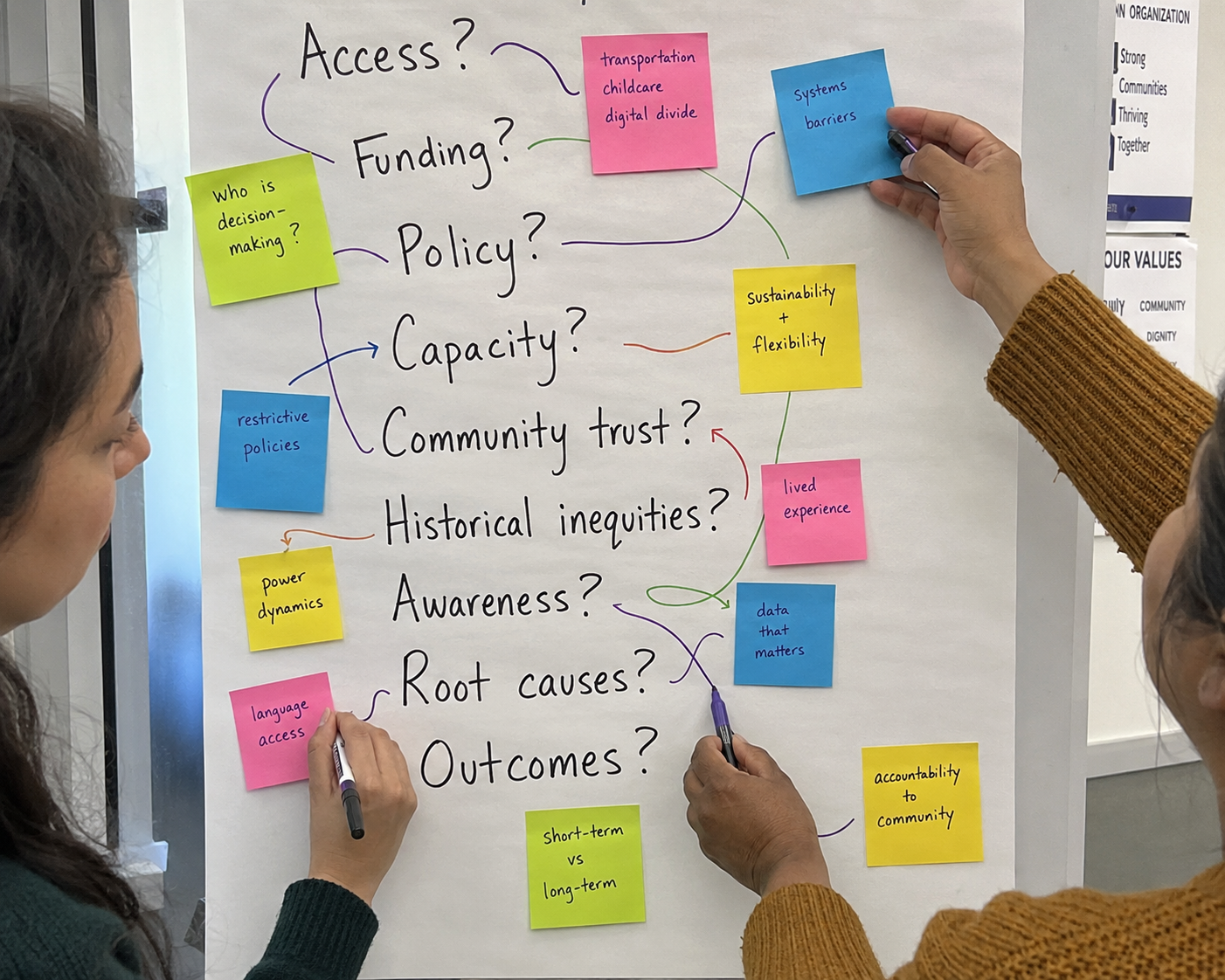
Most nonprofit teams do not struggle because they lack commitment.
They struggle because deeply committed people can still be working from different assumptions about what the real problem is.
A team can sit around the same table, use the same mission statement, care about the same community, and still be solving five different problems.
One person may believe the core issue is lack of access.
Another may see funding gaps.
Another may point to policy barriers.
Another may focus on historical inequities.
Another may see a capacity challenge.
Another may define the issue through community awareness, leadership, or systems change.
Each perspective may hold truth.
But if the team has not worked together to define the central problem, those different assumptions can quietly pull the organization in different directions.
This creates three common nonprofit pain points:
“Our team is not fully aligned on what problem we are actually solving.”
“We know our work matters, but we struggle to explain it clearly.”
“Our grant proposals feel disconnected from our actual work.”
These challenges may sound separate, but they are deeply connected.
When a team does not have a shared understanding of the problem, it becomes harder to explain the work, harder to connect programs to outcomes, and harder to write funding proposals that accurately reflect what is actually happening on the ground.
Program design gets harder because people may have different ideas about which activities matter most.
Fundraising gets harder because grant proposals may describe the problem one way while programs operate from a different understanding.
Evaluation gets harder because the team may not agree on what success should look like.
Communications get harder because the organization’s message can shift depending on who is speaking.
Leadership gets harder because every opportunity can feel important, even when it does not directly support the organization’s core strategy.
This is not a sign that the organization is failing.
It is often a sign that the work is complex.
The Hidden Cost of Skipping the Problem
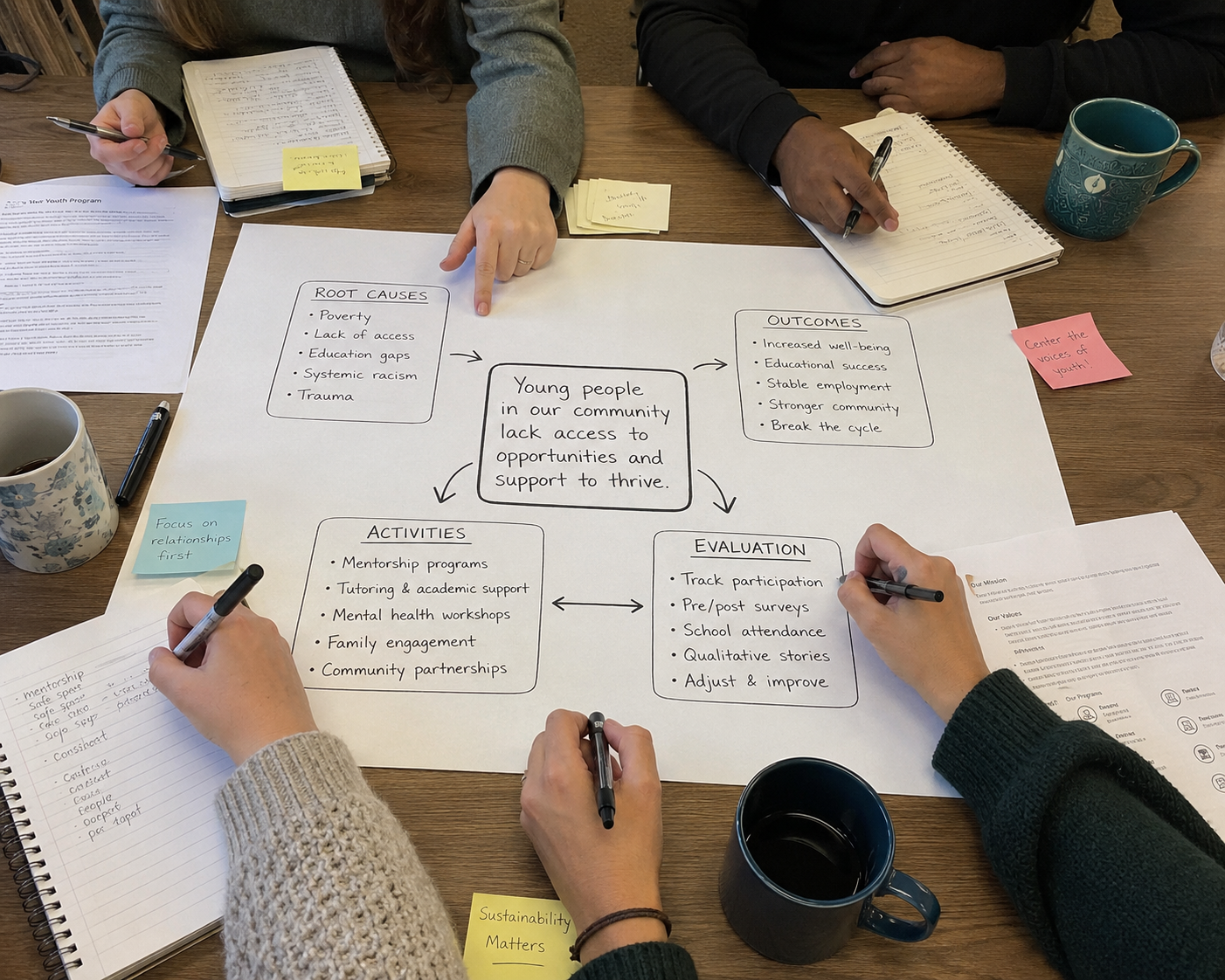
Many organizations move quickly from mission to activity.
They know what they care about, so they begin building programs, writing grants, launching partnerships, creating campaigns, and responding to urgent needs.
That responsiveness is often one of the greatest strengths of the nonprofit sector. But when the central problem has not been clearly defined, activity can create the illusion of progress. The organization may be busy, committed, and deeply mission-driven — but not fully aligned.
For example, imagine a nonprofit focused on youth success. The program team may define the problem as lack of mentoring. The development team may describe it as lack of resources. The executive director may see it as a systems issue. The board may talk about leadership development. The communications team may frame it as a community awareness challenge.
None of these perspectives are necessarily wrong.
But if they are not connected through a shared understanding, the organization can end up with scattered programs, mixed messaging, unclear outcomes, and funding narratives that do not fully match the work.
That is why problem alignment matters.
A mission tells people where you want to go.
A Theory of Change helps the team agree on the map.
Why This Shows Up in Fundraising and Communications
When the map is unclear, the story becomes unclear.
Many nonprofit teams know their work matters. They see the relationships being built, the barriers being addressed, the trust being earned, and the progress happening in real time.
But when it is time to explain that work to funders, partners, board members, or the broader community, the language can become difficult to pin down.
The team may struggle to answer:
What exactly is the problem we are solving?
Why does this problem exist?
Which root causes are we addressing?
What change are we working toward?
How do our activities lead to that change?
How will we know if we are making progress?
Without shared answers to those questions, the organization’s story can become inconsistent.
Program teams may be doing meaningful, community-centered work, but fundraisers may not have the language to explain that work clearly and compellingly. Grant proposals may emphasize outcomes that sound fundable but do not fully reflect what the program team is actually doing. Communications may focus on the most visible activities, while the deeper strategy remains unclear. Evaluation may collect data, but not always the data that helps tell the organization’s real impact story.
The result is a gap between the work itself and the way the work is described.
A Theory of Change helps close that gap.
It gives teams a shared framework for explaining what problem they are solving, why that problem exists, who is most affected, what change they are working toward, what activities support that change, and how they will know progress is happening.
When that logic is clear, the organization can communicate its work with more confidence.
Fundraisers can write stronger proposals.
Program teams can see their work reflected accurately.
Communications teams can tell a more consistent story.
Leaders can make clearer strategic decisions.
Funders can better understand how the organization creates impact.
Mission Alignment Is Not the Same as Problem Alignment
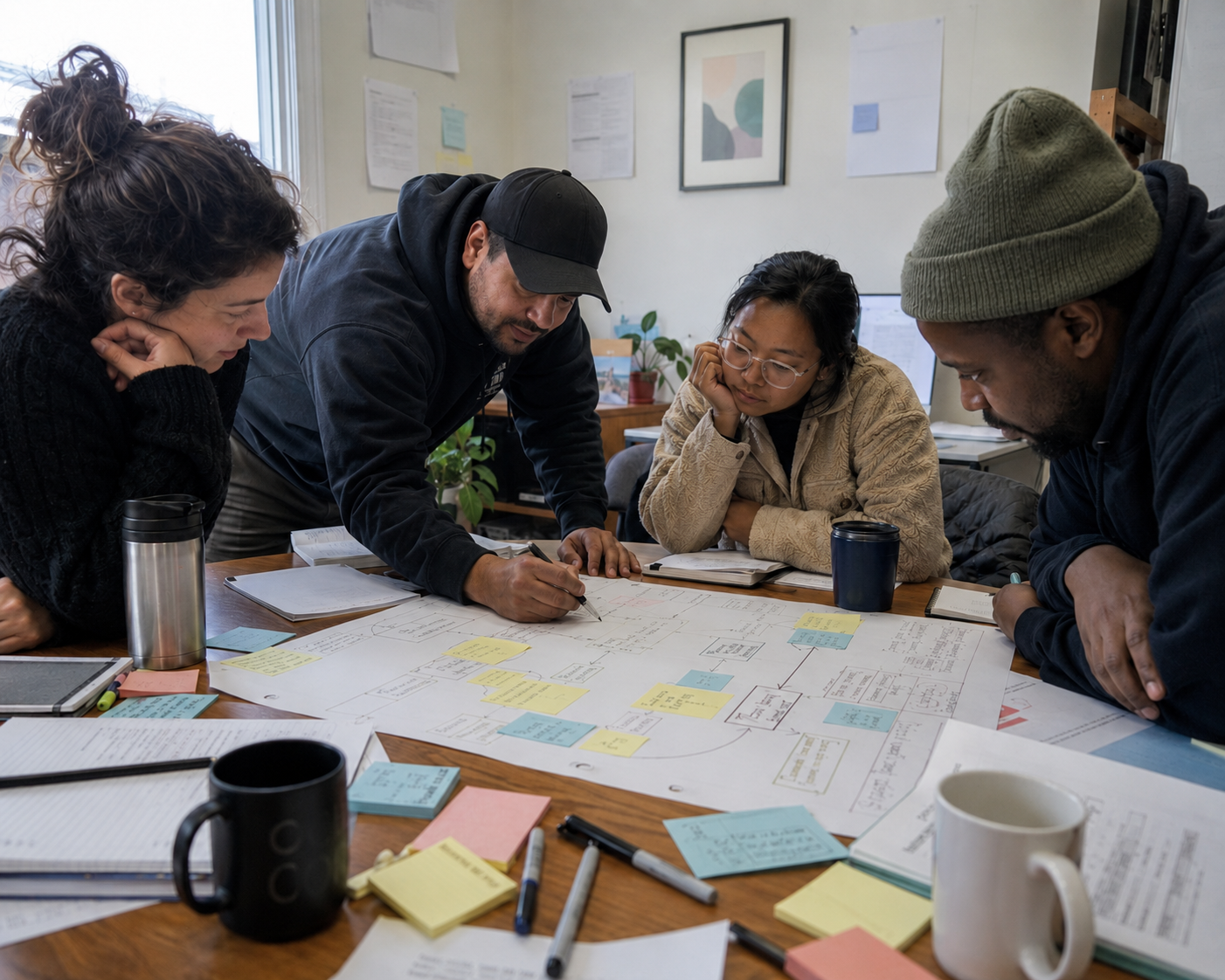
Most nonprofit teams are united by a shared mission.
They care deeply about the community. They believe in the work. They want to make a difference. They show up with commitment, creativity, and urgency. But shared commitment does not always create shared clarity. Often, the issue is not that people openly disagree. It is that each person is carrying a different mental model of the work.
Those mental models shape what people prioritize, what they measure, what they fundraise for, what they communicate, and what they believe the organization should do next.
When the problem is unclear, the strategy becomes scattered.
When the strategy is scattered, the outcomes become vague.
When the outcomes are vague, evaluation becomes harder.
When evaluation is harder, fundraising becomes less compelling.
And when fundraising, evaluation, programs, and communications are not aligned, the organization has less capacity to do the work it cares about most.
Complexity Requires Shared Understanding
Nonprofits are usually responding to layered, real-world challenges.
The problems they address are rarely simple. They may be connected to history, policy, funding systems, community trust, access to services, social conditions, and long-term inequities.
So the goal is not to force everyone into a simplistic answer.
The goal is to create a shared understanding.
A Theory of Change process does not erase different perspectives. In fact, it depends on them. Program staff, fundraisers, executive directors, board members, communications teams, evaluators, and community partners may each see a different part of the problem.
The value of the process is that those perspectives are brought into the open, tested together, and organized into a clear logic for action.
Alignment does not mean everyone has the same role or perspective.
It means everyone understands the same map.
How a Theory of Change Helps
A strong Theory of Change gives nonprofit teams a structured way to slow down and ask the questions that often get skipped:
What is the central problem we are trying to solve?
Who experiences this problem most directly?
What are the root causes?
What are the consequences if nothing changes?
Which causes are we best positioned to address?
What change do we believe is possible?
What outcomes should we work toward together?
How will we know if change is happening?
These questions may sound basic, but they are powerful. Because once a team agrees on the problem, the rest of the work becomes more focused. The activities make more sense. The outcomes become easier to define. The evaluation plan becomes more meaningful. The fundraising narrative becomes stronger. The communications become more consistent.
The team can make better decisions about what to pursue and what to decline.
Without a shared map, every opportunity can look like the right road. A Theory of Change helps the organization clarify which road actually leads to the change it wants to create.
Why This Matters Across the Organization
A shared Theory of Change is especially important when organizations are growing, partnering, pursuing funding, launching new programs, or serving multiple communities.
Without it, different departments may create their own versions of the story. The board may talk about the work differently than staff. Fundraisers may describe outcomes that program teams do not fully own. Communications teams may promote a message that sounds compelling but does not reflect the deeper strategy. Program teams may be asked to measure outcomes that were never clearly connected to their activities. Leaders may feel pressure to say yes to opportunities that are mission-adjacent but not strategy-aligned.
A Theory of Change helps bring those voices into one process. It creates space for the team to name assumptions, test logic, and build a shared model of how change happens.
For fundraisers, this means clearer proposal language. For program teams, it means a stronger connection between activities and outcomes. For leaders, it means better strategic focus. For communications teams, it means a message that is easier to repeat and easier to trust. For board members, it means a clearer way to understand and champion the organization’s impact. And for the organization as a whole, it means less confusion and more shared direction.
Alignment Happens Through Process
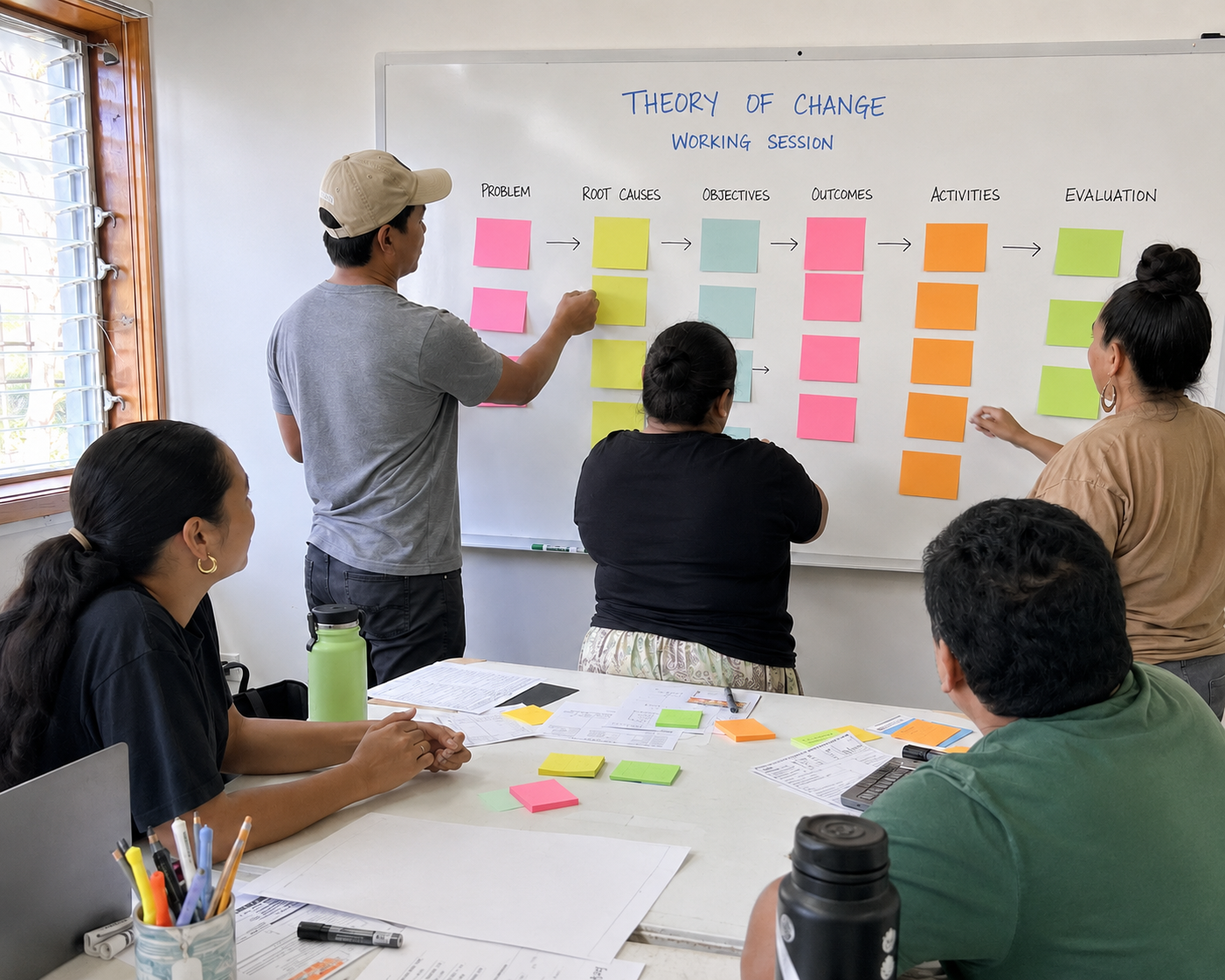
Alignment does not happen through a slogan. It happens through a process. That is why a Theory of Change workshop is not just a planning exercise. It is a team alignment tool.
When teams walk through the logic together, they begin to see how each part of the work connects. They can identify gaps, clarify assumptions, and build a stronger foundation for decision-making.
The process helps teams move from broad agreement to focused action.
It helps answer questions like:
Are we solving the right problem?
Are our activities connected to our intended outcomes?
Are we measuring what matters?
Are we telling a consistent story?
Are we making decisions based on strategy or urgency?
Are we clear about the change we are trying to create?
When everyone is working from the same understanding of the problem, the mission becomes easier to act on.
Join the Theory of Change Workshop
Is your team ready to work from the same map?
Join Yisroel Quint for a hands-on Theory of Change Workshop that helps nonprofit teams align around a shared understanding of the problem, the strategy, the outcomes, and the path to impact.
This workshop is especially helpful for nonprofit teams that know their work matters but struggle to explain it clearly, and for organizations whose grant proposals feel disconnected from the actual work happening in programs.
The practical 2-hour session is designed for the people responsible for turning mission into action: executive directors, fundraisers, program staff, communications teams, evaluators, and board leaders.
Participants will work through one shared example together using a practical, step-by-step approach adapted from the Swedish International Development Agency’s Logical Framework Approach.
Through this process, participants will see how a clearly defined problem leads to root cause analysis, which then leads to objectives, outcomes, outputs, activities, and evaluation.
That step-by-step structure matters.
Because when teams understand the logic behind the work, they are better equipped to design programs, strengthen funding proposals, communicate impact, evaluate progress, and make strategic decisions with confidence.
The workshop is designed to help nonprofit teams close the gap between meaningful work and clear explanation — so programs, fundraising, evaluation, and communications can all work from the same map.
Your mission deserves more than good intentions.
It deserves a shared strategy.
Help your team move forward with greater clarity, alignment, and purpose.
DISCOVER MORE