
Your Work Is Powerful.
PAST PODS

So Why Is It So Hard to Explain?

Every nonprofit has had this moment.
You are talking to a funder, writing a grant proposal, preparing for a donor meeting, or updating your website, and suddenly the work that feels so clear in practice becomes hard to explain on paper.
You know the work matters.
You see the impact every day.
You can tell stories about the people, communities, and organizations you serve.
But when it is time to describe the full picture — the problem, the solution, the outcomes, and why your approach works — the language starts to feel either too broad, too detailed, or too disconnected.
This is especially frustrating for fundraisers.
Because fundraisers are often responsible for translating complex, community-rooted work into clear and compelling language that funders can understand. They are asked to explain the need, describe the program, show the impact, align the budget, and make the case for support — often without a shared framework that connects all the pieces.
That is why many nonprofit teams run into two common pain points:
“We know our work matters, but we struggle to explain it clearly.”
And:
“Our grant proposals feel disconnected from our actual work.”
These two challenges are deeply connected.
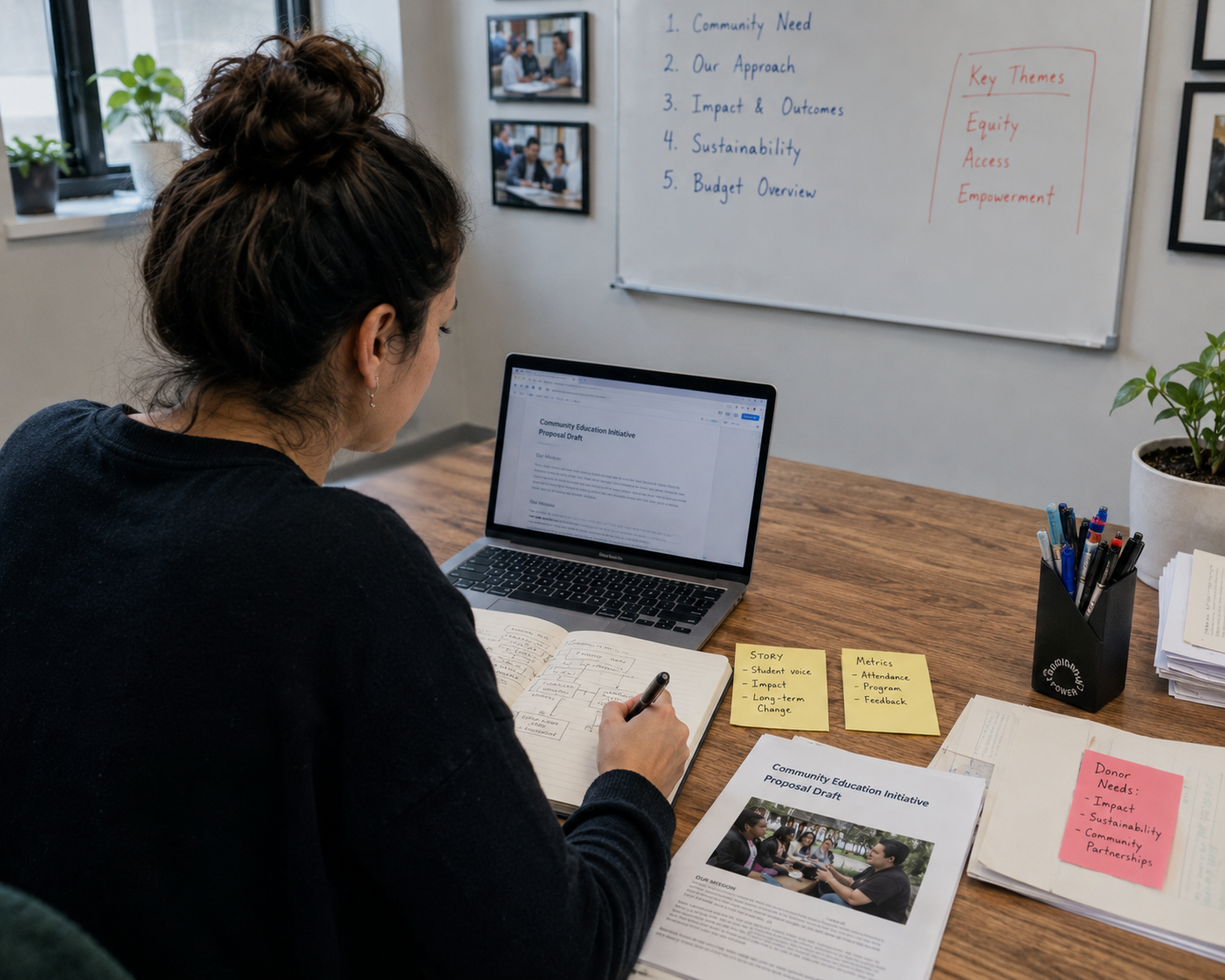
When an organization does not have a clear explanation of how its work creates change, grant proposals can start to feel patched together. The need statement may say one thing. The activities may point in another direction. The outcomes may sound good, but not fully match the program. The evaluation plan may count participation, but not capture meaningful progress.
The result is a proposal that may be well written, but not fully aligned.
And funders notice.
Funders are not only looking for inspiring language. They are looking for logic. They want to understand what problem you are solving, why that problem exists, what your organization is doing about it, and how your activities will lead to measurable change.
That is where a Theory of Change can make a major difference.
A Theory of Change helps nonprofits move from scattered descriptions to a clear, connected story. It gives fundraisers and program teams a shared structure for explaining:
What problem the organization is addressing
Why the problem exists
Who is affected
What needs to change
What outcomes the organization is working toward
What activities support those outcomes
How progress will be measured
Instead of starting every grant proposal from scratch, your team has a clear map to work from.
That map does not replace storytelling. It strengthens it.
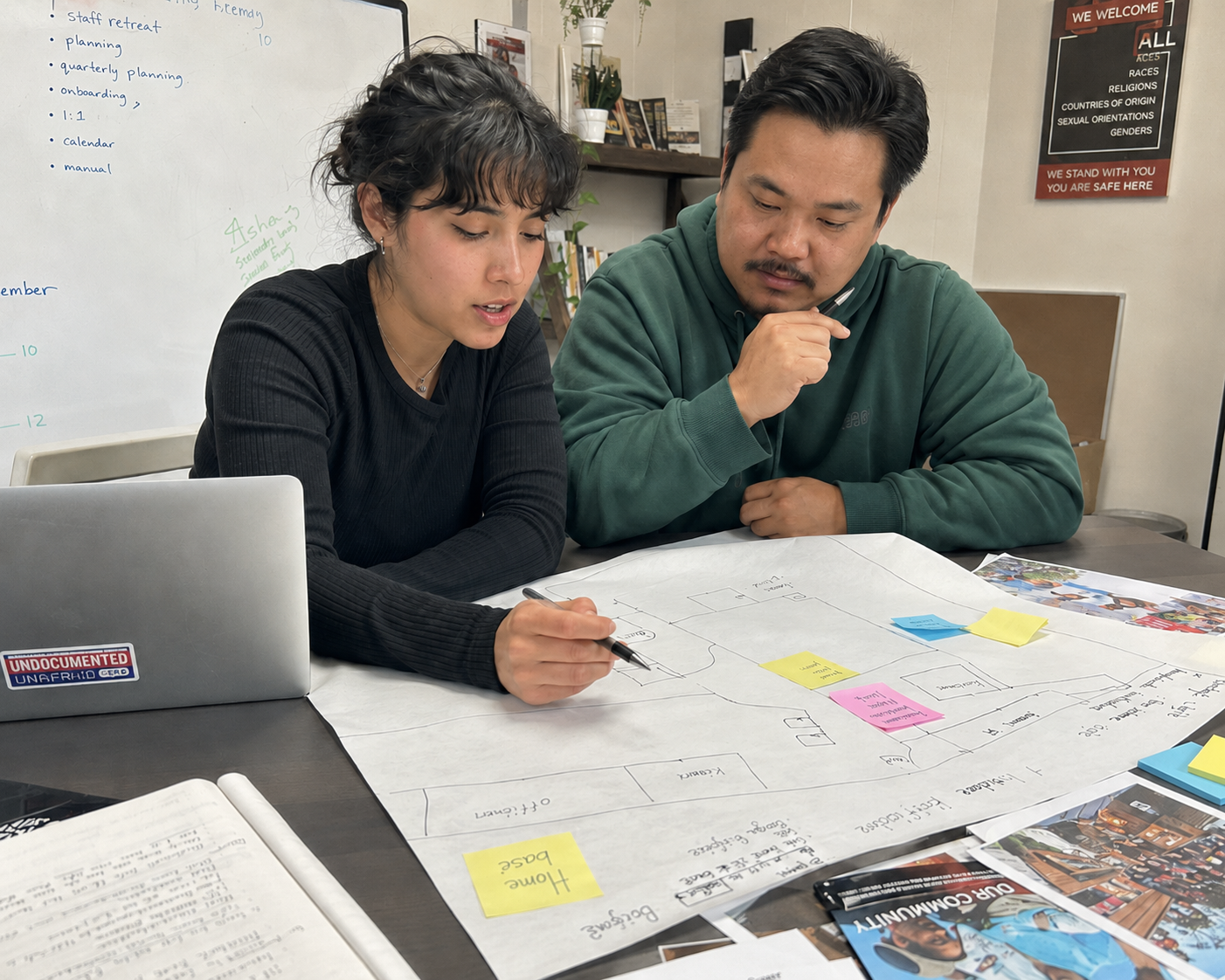
A strong Theory of Change allows your stories to sit inside a larger framework. It helps funders see that your work is not just heartfelt, but strategic. Not just active, but intentional. Not just important, but fundable.
It also helps reduce the tension that can happen between fundraising and program teams.
Fundraisers often need concise, persuasive language. Program staff often want to make sure the work is represented accurately and with nuance. A Theory of Change creates a bridge between the two. It gives everyone a shared way to talk about the work without flattening its complexity.
This is especially valuable for nonprofits working in complex issue areas, including Indigenous-led organizations, community-based initiatives, and groups addressing systemic challenges. In these contexts, the work may involve trust-building, cultural knowledge, leadership development, advocacy, healing, capacity-building, or long-term systems change.
That kind of work deserves more than a generic program description.
It needs a clear explanation of how change happens.
In the Theory of Change workshop with Yisroel Quint, participants will learn a practical, repeatable process for building that explanation. During the 2-hour session, the group will work through a shared example step by step, moving from a clearly defined problem to root causes, consequences, objectives, outcomes, outputs, activities, and evaluation.
Participants will leave understanding not only the framework, but how to apply it in their own organizations.
For fundraisers, this can lead to stronger grant proposals, clearer donor communications, and more confident conversations with funders.
For nonprofit leaders, it can create a stronger foundation for strategy, messaging, and program design.
And for the full team, it can bring clarity to work that may be powerful, but difficult to explain.
Because when your work matters, people should be able to understand it.
And when funders understand it, they are more likely to support it.

Ready to turn complexity into clarity?
Join us for the Theory of Change workshop with Yisroel Quint, a practical 2-hour session designed to help fundraisers, nonprofit leaders, and program teams clearly define the problem they are solving, map root causes, and build a stronger story of impact.
You will leave with a repeatable process you can use to strengthen grant proposals, donor communications, program design, evaluation, and team alignment.
Give your organization a clearer, stronger foundation for fundraising and impact.
DISCOVER MORE