
Your Nonprofit Is Growing.
PAST PODS

But Is Your Strategy Keeping Up?
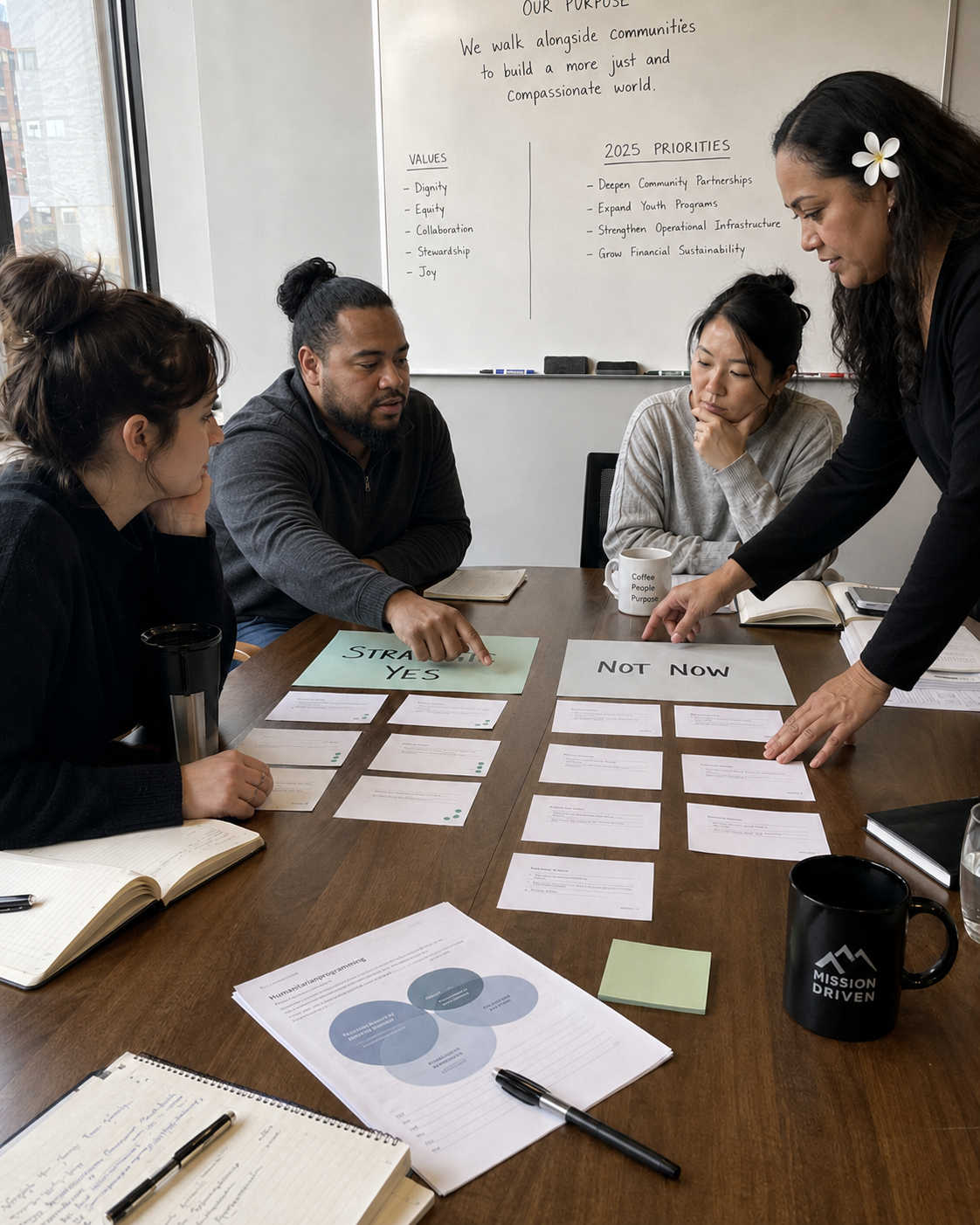
Growth is a good problem to have—until your programs, data, and priorities start pulling in different directions.
A new program launches.
A funder asks you to expand.
A partner invites you into a promising initiative.
A community need emerges, and your team responds.
A pilot works, so you build on it.
Before long, a small idea has become a major part of your organization.
This kind of growth usually comes from the right place. Nonprofits listen, adapt, and step in when communities need support. They find ways to serve, even when resources are stretched thin.
But growth can also create a hidden challenge.
Your organization may have more programs, more audiences, more data, and more reporting requirements—but not necessarily a clearer strategy.
That is when nonprofit leaders often find themselves saying:
“We collect a lot of data, but we are not always sure what it proves.”
“Our programs have grown, but our strategy has not kept up.”
These challenges are deeply connected.
When More Data Does Not Create More Clarity
When programs grow without a clear strategy, evaluation can quickly become messy.
Teams may track what is easiest to count instead of what is most important to understand. Reports fill up with attendance numbers, services delivered, events held, and participants reached.
Those numbers matter. But they do not always answer the bigger questions:
What changed because of this work?
Did participants gain knowledge, confidence, or skills?
Did organizations strengthen their capacity?
Did relationships improve?
Did community members take action?
Did the program move us closer to our long-term goals?
The organization may be busy. The data may be accurate. The report may be full.
And yet, the meaning can still feel unclear.
That is frustrating for nonprofit leaders, fundraisers, program staff, and funders alike.
Funders want to understand the difference their investment will make—not only what an organization will do, but what is expected to change as a result.
At the same time, staff may feel overwhelmed by reporting requirements that fail to capture the deeper value of their work.
The answer is not necessarily more data.
It is better alignment between your strategy, programs, and measurement.
A Theory of Change Connects the Dots
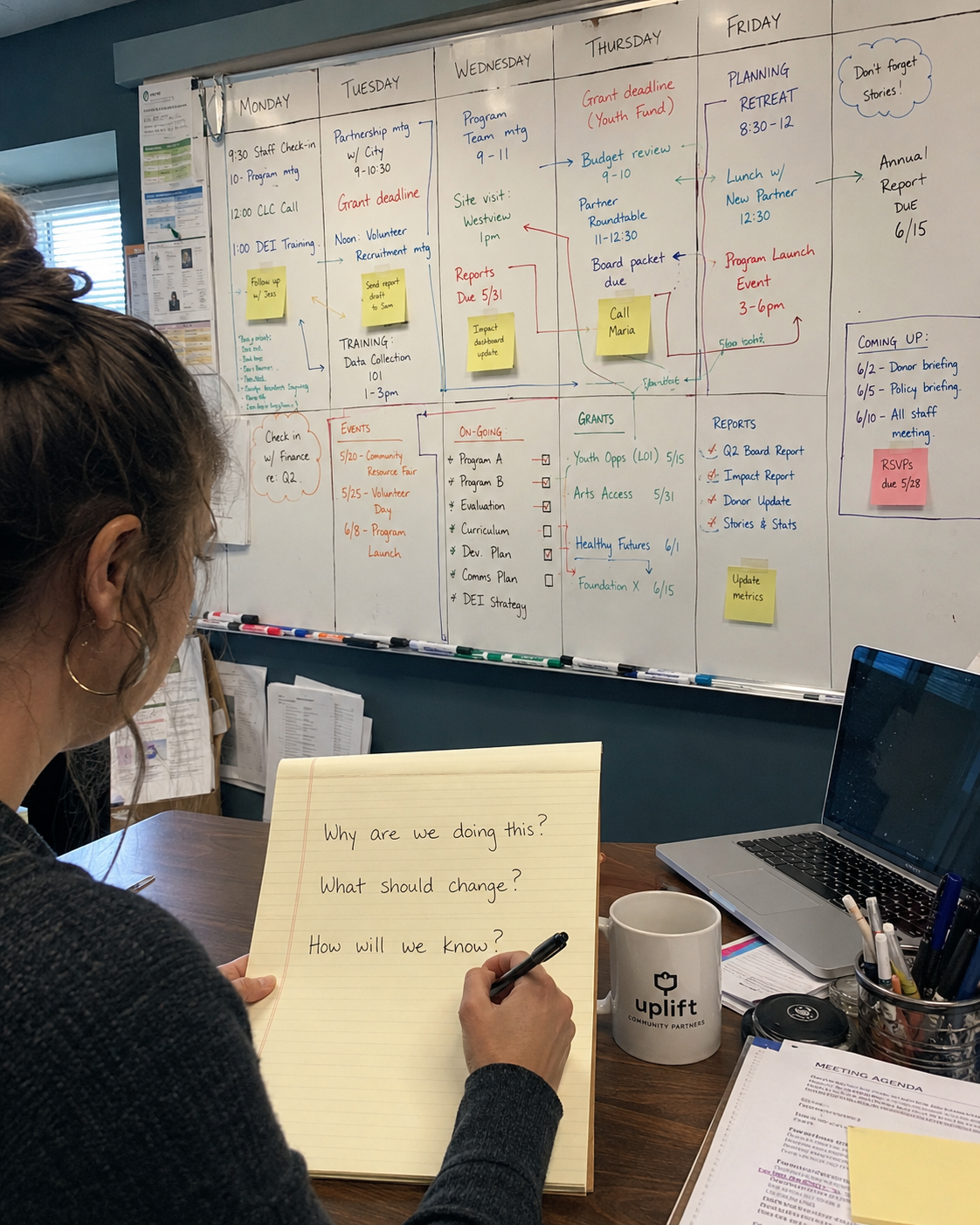
A Theory of Change gives your organization space to step back and look at the full picture.
It helps your team ask:
What are we ultimately trying to change?
What is causing the problem?
Which programs directly support the change we want to see?
Which activities are essential?
Which outcomes matter most?
What should we measure?
What are we learning?
Where have we drifted?
What needs to be strengthened, redesigned, or stopped?
This process helps organizations separate activity from impact.
Activities are what you do.
Outputs are what those activities produce.
Outcomes are the changes that happen as a result.
Impact is the larger, long-term change your organization contributes to.
For example:
Hosting a training is an activity.
The number of people who attend is an output.
Increased knowledge, stronger skills, or a change in behavior are outcomes.
A stronger organization, community, or system may be part of the long-term impact.
Each piece matters. But they are not interchangeable.
When outputs are mistaken for outcomes, evaluation plans can show how hard an organization is working without clearly showing what is changing.
A Theory of Change helps your team measure what matters—not only what is easiest to count.
Growth Requires Strategic Focus
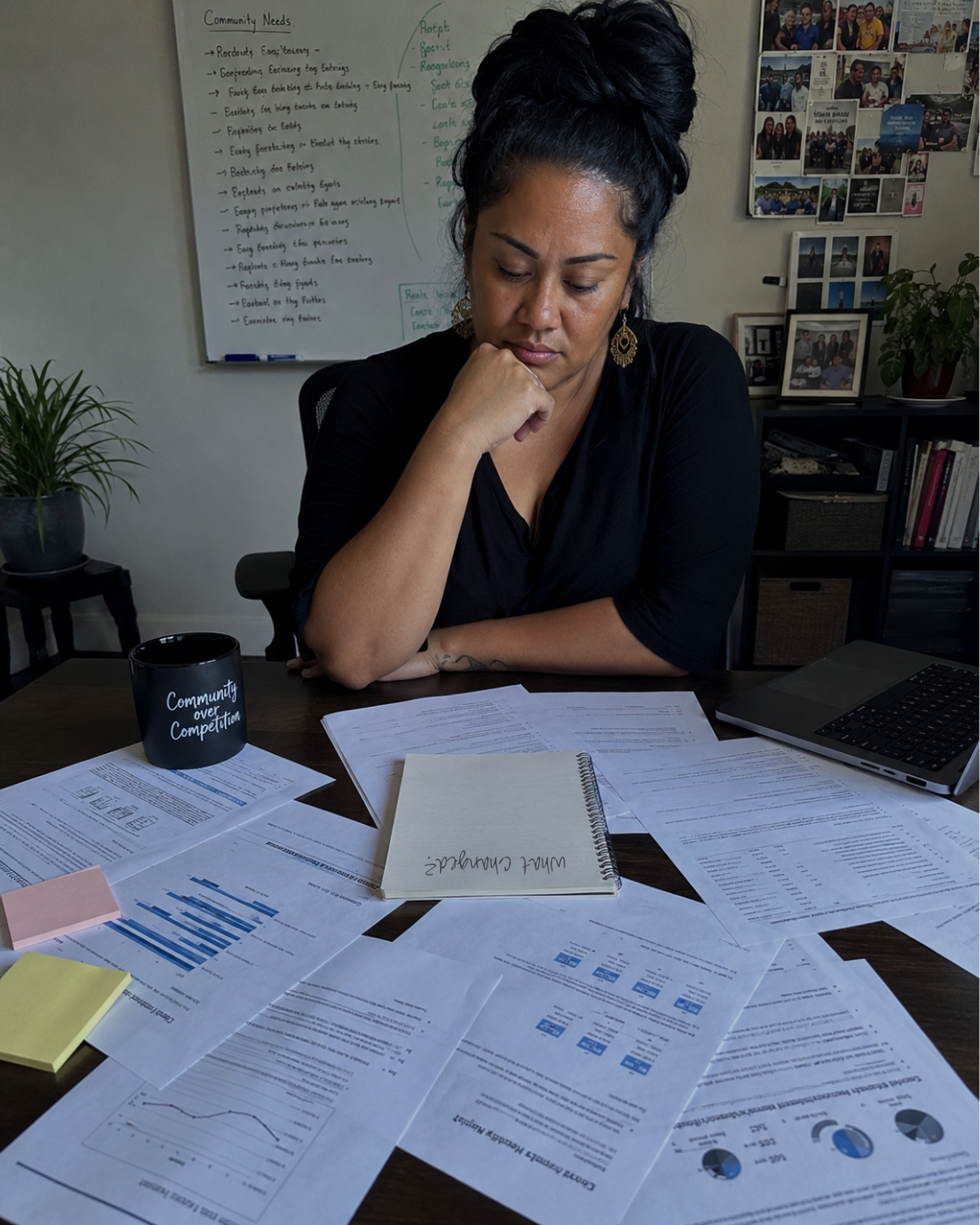
A Theory of Change is not only an evaluation tool. It is also a powerful way to strengthen strategic focus.
As organizations grow, they need a reliable way to decide whether every program, partnership, and opportunity still supports the larger mission.
That means asking honest questions:
Does this activity connect to our intended outcomes?
Are we still addressing the root causes we identified?
Are we spreading our team too thin?
Are we saying yes to opportunities that do not fit our strategy?
Are there gaps in our current approach?
Do any programs need to be redesigned?
These questions are not about cutting programs simply for the sake of cutting.
They are about focus.
A focused organization can tell a stronger story, make more confident decisions, design better programs, and build more meaningful evaluation plans.
It can use data not only to report to funders, but also to learn, adapt, and improve.
Turn Your Theory of Change Into a Working Tool
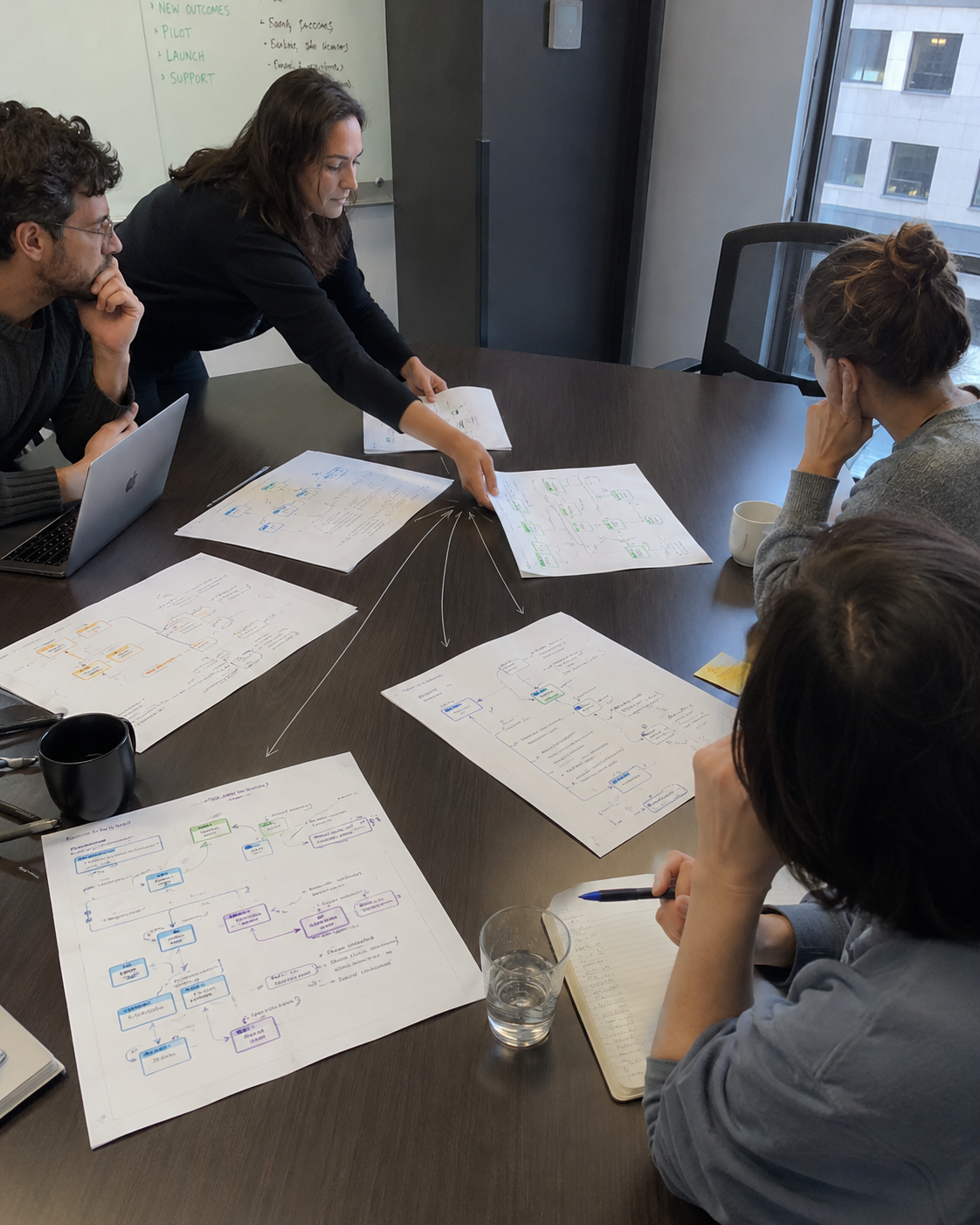
In this practical Theory of Change workshop, Yisroel Quint will guide participants through a clear process for connecting problem analysis, program design, outcomes, activities, and evaluation.
Participants will see how each piece builds on the one before it—so the final Theory of Change is not simply a diagram created for a grant attachment.
It becomes a working tool.
A tool for fundraising.
A tool for evaluation.
A tool for communication.
A tool for internal learning.
A tool for strategic decision-making.
During the two-hour session, participants will work through a shared example step by step. They will learn how to:
Define a core problem
Identify root causes and consequences
Clarify long-term goals
Develop meaningful outcomes
Align outputs and activities
Create the foundation for a practical evaluation plan
This workshop is especially valuable for organizations that have grown quickly, added programs over time, or adapted in response to changing community needs.
Because sometimes the work does not need to be reinvented.
It needs to be organized.
A Theory of Change can help your organization take an honest look at what you are doing, why you are doing it, what you are measuring, and where you are headed.
That clarity is valuable to funders.
But it is even more valuable to your organization.
Because growth without strategy can lead to confusion and exhaustion.
Growth guided by a clear Theory of Change can lead to stronger decisions, better alignment, and greater impact.
Register for the Theory of Change Workshop
Ready to connect your programs, data, and strategy?
Join Yisroel Quint for a practical two-hour Theory of Change workshop designed to help nonprofit teams move from a clearly defined problem to an aligned logic model and evaluation plan.
You will learn a repeatable process for clarifying outcomes, aligning activities, measuring what matters, and building a stronger foundation for fundraising, evaluation, communications, and strategic decision-making.
Create a clearer path from the work your organization does to the impact it wants to achieve.
DISCOVER MORE